
RoRo vs Flat Rack vs Breakbulk
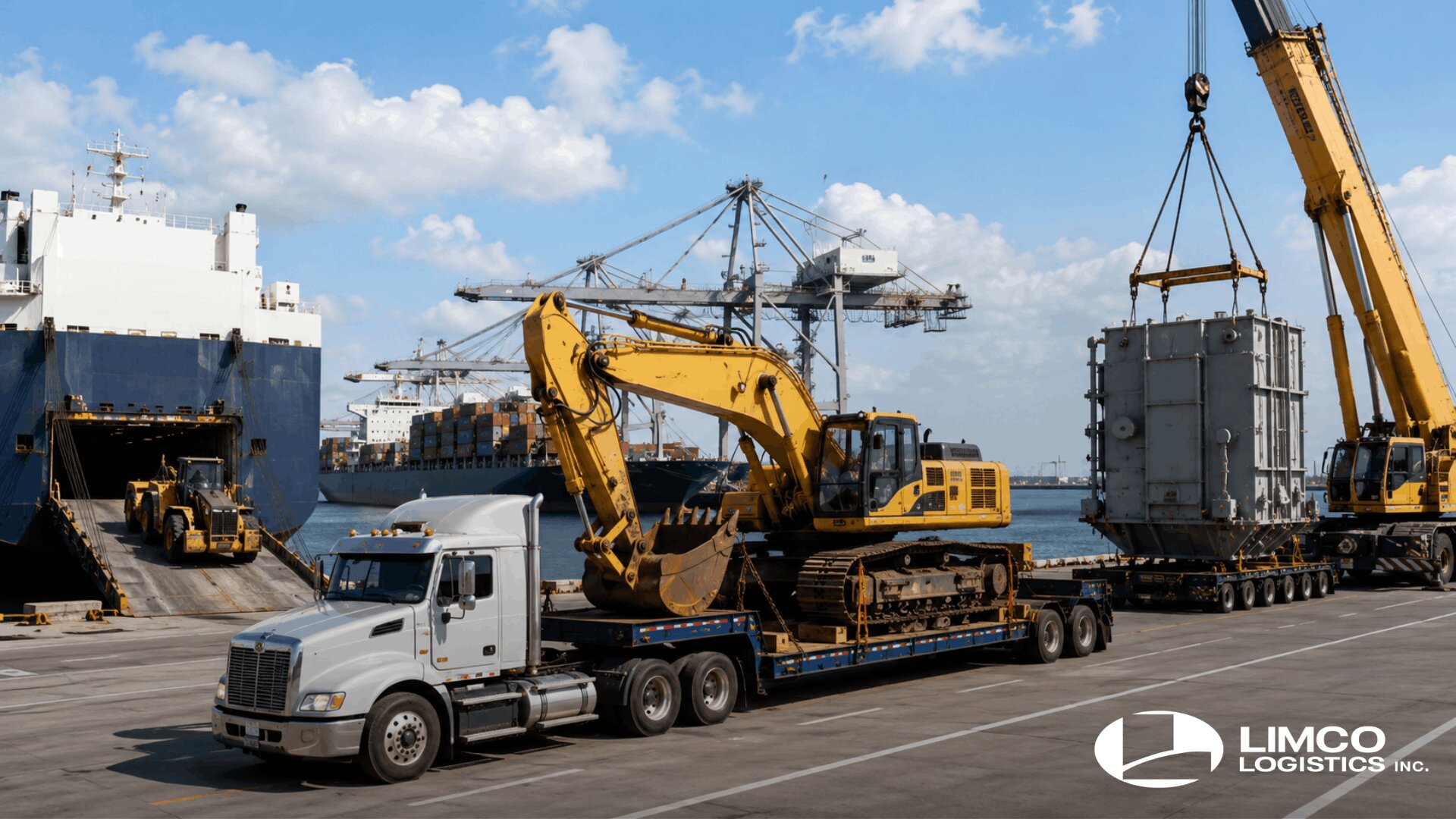
The wrong shipping method can make a heavy equipment shipment expensive before the cargo even reaches the port.
A running excavator may look like a simple RoRo move until its height, attachments, terminal rules, or destination handling requirements change the plan. A generator may appear suitable for flat rack shipping until its weight distribution or lifting points make breakbulk safer. A project cargo unit may be technically movable, but still fail commercially if the inland haul, vessel window, port handling and customs documents are not aligned.
For enterprise shippers, the real decision is not RoRo versus flat rack versus breakbulk in isolation.
The real decision is which method gives the cargo the most controlled movement across pickup, port delivery, vessel loading, ocean transit, discharge and final release.
That is where the choice becomes operational, not just commercial.
Quick Look
RoRo is best for vehicles, trucks, trailers, buses, tractors and self propelled equipment that can roll safely onto a vessel.
Flat rack shipping is best for oversized cargo that cannot fit inside a standard container but can still be lifted, secured and moved on a container platform.
Breakbulk is best for cargo that is too large, too heavy or too irregular for RoRo or flat rack handling.
The right method depends on cargo mobility, dimensions, weight, lifting points, vessel acceptance, port capability, inland access, customs readiness and destination handling.
For Limco Logistics, this decision sits at the center of complex cargo planning. The company’s RoRo freight service already supports vehicle shipping, heavy machinery transport and project cargo movement, while its heavy equipment expertise brings inland coordination, ocean freight planning, documentation and destination discharge into one execution view.
The Mode Is Only One Part of the Shipment
Heavy equipment and project cargo do not move successfully because only one vessel option is available.
They move successfully when every operational dependency has been checked before the cargo starts moving.
A complete method review should answer:
- Can the cargo roll, be towed, or does it need lifting?
- Can the pickup site support heavy haul equipment?
- Are permits, escorts, or route surveys needed before port delivery?
- Does the cargo meet vessel and terminal acceptance rules?
- Are weight, dimensions, and center of gravity verified?
- Is the documentation ready before the cutoff?
- Can the destination port discharge and release the cargo without delay?
This is why Limco’s approach to heavy equipment shipping is relevant to this discussion. The movement is not treated as a single ocean booking. It is structured around inland transport, port operations, RoRo or breakbulk vessel planning, cargo readiness, documentation and destination coordination.
That is the level of thinking needed before deciding between RoRo, flat rack and breakbulk.
RoRo Works When Mobility Is an Asset
RoRo, or Roll on Roll off, is built around cargo that can move through a ramp-based vessel operation.
It is commonly used for:
- Cars and SUVs
- Trucks and buses
- Trailers
- Agricultural machinery
- Construction equipment
- Self propelled heavy machinery
- Wheeled project cargo
For cargo that can roll safely, RoRo reduces the need for crane lifting and allows vehicles or machines to move through a purpose built loading process.
That is why RoRo is often the preferred route for vehicle exporters, machinery dealers, fleet operators, and construction equipment shippers. Limco’s guide on how to ship a car overseas using RoRo explains the practical sequence behind this method, including route confirmation, vehicle preparation, export documentation, customs clearance and tracking.
But RoRo is not automatically suitable just because the cargo has wheels.
The cargo must still be checked for:
- Running condition
- Steering and braking
- Fluid leaks
- Height and width restrictions
- Ramp and deck limits
- Terminal acceptance rules
- Documentation readiness
- Destination port capability
This is where Limco’s RoRo capability becomes commercially useful. The value is not only booking space. It is checking whether the cargo should move as RoRo in the first place, then aligning the booking with the documentation, terminal timing and destination requirements.
Limco’s article on RoRo shipping for vehicles and heavy equipment in 2026 makes the same point from an execution perspective: RoRo performance depends on preparation, vessel allocation, customs accuracy and terminal control.
Flat Rack Works When the Cargo Is Oversized but Still Container Compatible
Flat rack shipping is used when cargo cannot fit inside a standard container but can still be lifted and secured on a container platform.
It is often used for:
- Industrial machinery
- Generators
- Construction equipment
- Steel structures
- Oversized crates
- Boats
- Large parts
- Equipment with excess height or width
Flat rack shipping is not a compromise between RoRo and breakbulk. It is a specific method for cargo that remains compatible with container vessel operations but requires special equipment and securing.
The planning challenge is precision.
A flat rack shipment depends on exact dimensions, verified gross weight, lifting points, tie down points, over width acceptance, equipment availability and a securing plan that works for the cargo’s shape and center of gravity.
This is where an experienced forwarder matters. Limco’s ocean freight services already include RoRo and broader ocean cargo coordination, which is important because flat rack decisions are tied to carrier acceptance, port handling, vessel planning and special equipment availability.
Flat rack is often the right direction when:
- RoRo is not suitable because the cargo cannot roll
- Standard container loading is impossible
- The cargo can be lifted safely
- The cargo can be secured to a platform
- The lane has special container equipment available
- Breakbulk would be more complex than required
The risk is assuming flat rack is just another container move. It is not. It requires cargo engineering discipline before booking.
Breakbulk Works When the Cargo Has Moved Beyond Container Logic
Breakbulk is used when cargo cannot be moved safely through RoRo or flat rack operations.
This usually applies to:
- Large industrial machinery
- Power and energy equipment
- Infrastructure components
- Heavy project cargo
- Large steel structures
- Factory equipment
- Oversized units with irregular shapes
- Cargo requiring crane loading or engineered stowage
Breakbulk planning is more intensive because the cargo is handled as an individual unit. Vessel suitability, crane capacity, lifting method, stowage plan, marine lashing, port access, insurance and destination discharge all become part of the decision.
Limco’s heavy equipment content references breakbulk vessel space, RoRo for self propelled machinery, flat rack solutions, heavy lift crane coordination and engineered marine lashing as part of heavy equipment ocean transport. That matters because the method decision is rarely theoretical. It is based on what the cargo physically requires and what the route can support.
Breakbulk becomes the better choice when:
- Cargo exceeds flat rack limits
- Weight is too high for special container handling
- Shape prevents safe platform securing
- Crane loading is required
- The project timeline requires a dedicated handling plan
- Destination discharge must be planned before sailing
For enterprise projects, breakbulk is not a backup option. It is often the correct option when cargo risk, not convenience, should drive the decision.
RoRo vs Flat Rack vs Breakbulk Comparison
How the Decision Should Actually Be Made
The best method is usually visible once the cargo is reviewed correctly.
Start with the cargo’s physical behavior.
If it can roll safely, RoRo deserves first review. If it cannot roll but can be lifted and secured, flat rack may be suitable. If it exceeds the container system entirely, breakbulk should be reviewed early, not after other options fail.
Then test the method against the full route.
A good method must work at origin, at port, on the vessel, at destination and through final release.
For example:
- A bulldozer may be RoRo suitable only if the route has the right vessel and port acceptance.
- A generator may be flat rack suitable only if lifting points, width and securing requirements are clear.
- A transformer may require breakbulk because the cargo weight and discharge requirements drive the entire shipment plan.
Limco’s role fits naturally here because the company is not limited to one narrow mode. Its service structure spans RoRo freight, ocean freight, car shipping, heavy machinery, project cargo, inland coordination and shipment tracking. That allows the method conversation to stay practical instead of being forced into one service category.
Documentation and Timing Can Change the Method
Method selection is not only about cargo size.
Documentation and timing can change the risk profile of the shipment.
RoRo shipments may require vehicle titles, export filings, customs documents, port delivery windows and vessel cutoff planning. Limco’s RoRo car shipping guide notes that vehicle details, route confirmation, documents, customs clearance and tracking are all part of the process.
For enterprise vehicle exporters, regulatory and capacity risk can also affect planning. Limco’s blog on global vehicle exports and RoRo risk discusses how tariff volatility, capacity and compliance can influence vehicle export execution.
Flat rack and breakbulk cargo bring their own documentation pressure, including commercial invoices, packing details, cargo drawings, HS code accuracy, lifting information and destination import requirements.
This is why waiting until the cargo is already at the port is risky. The correct method needs time to be confirmed, documented and synchronized with the vessel plan.
The Enterprise View: Control Over Assumption
For smaller shipments, a mode error may create inconvenience.
For enterprise cargo, it can create a project delay, storage exposure, rebooking cost, equipment downtime or missed delivery commitment.
That is why the decision should be handled as a control exercise.
The shipment plan should confirm:
- The cargo can physically move by the selected method
- The inland route supports port delivery
- The vessel and port can accept the cargo
- The documents match the cargo condition
- The destination team can discharge and release the cargo
- Tracking and milestone communication are available during transit
This is where Limco’s operational positioning becomes part of the value without needing to overstate it. For complex cargo, customers need a logistics partner that can connect these steps before the shipment is already exposed.
Limco’s RoRo capacity planning article reinforces the same enterprise logic: vessel space, regulatory awareness, documentation discipline and volume planning matter when capacity and compliance pressure increase.
Practical Pre Booking Checklist
Before requesting a final quote, prepare the information that will allow the method to be reviewed properly.
You should have:
- Cargo type and description
- Make, model and serial number if available
- Photos from all sides
- Length, width and height in transport condition
- Gross weight
- Running or non running status
- Steering and brake condition if wheeled
- Lifting points
- Tie down points
- Origin location
- Destination port or delivery point
- Cargo readiness date
- Special handling instructions
- Available export or commercial documents
This gives the logistics team enough information to determine whether RoRo, flat rack or breakbulk is the right path.
Final Takeaway
RoRo, flat rack and breakbulk are not competing labels. They are three different execution models.
RoRo works when mobility is the advantage.
Flat rack works when the cargo is oversized but still compatible with container vessel operations.
Breakbulk works when the cargo requires its own handling plan.
The right decision depends on how the cargo behaves, how the route operates, how the port will handle it and how the destination will receive it.
For heavy equipment, vehicles, machinery and project cargo, Limco Logistics can review the shipment details before the method is locked in. That early review can help avoid the common problems that come from forcing cargo into the wrong shipping category.
If you already have cargo dimensions, photos, origin, destination and readiness dates, share them through the Limco Logistics contact form or schedule a discussion with a Limco representative. The sooner the cargo profile is reviewed, the easier it becomes to choose the right method, protect the timeline and build a shipment plan that holds up beyond the quote.
FAQs
Is RoRo better than flat rack for heavy equipment?
RoRo is better when the equipment can roll safely, meets vessel restrictions and is accepted by the origin and destination ports. Flat rack is better when the cargo cannot roll or does not fit RoRo rules but can still be lifted and secured on a platform.
When does cargo need breakbulk instead of flat rack?
Cargo usually needs breakbulk when it is too large, too heavy or too irregular for flat rack handling. Breakbulk is also preferred when the cargo requires crane loading, engineered stowage or specialized destination discharge planning.
Can non running equipment move by RoRo?
Non running equipment may move by RoRo only if it can be safely handled under carrier and terminal rules. In many cases, flat rack or breakbulk may provide a safer and more practical option.
What information is needed before choosing the shipping method?
The logistics team should review cargo photos, dimensions, gross weight, running condition, lifting points, tie down points, origin, destination and readiness date before recommending RoRo, flat rack or breakbulk.
Why should Limco review the cargo before booking?
A cargo review helps confirm whether the selected method matches the actual shipment conditions. Limco can evaluate RoRo suitability, flat rack feasibility, breakbulk requirements, documentation needs, port handling and destination readiness before the shipment is exposed to avoidable delay.
