
How to Ship a Car Overseas: The Complete RoRo Guide
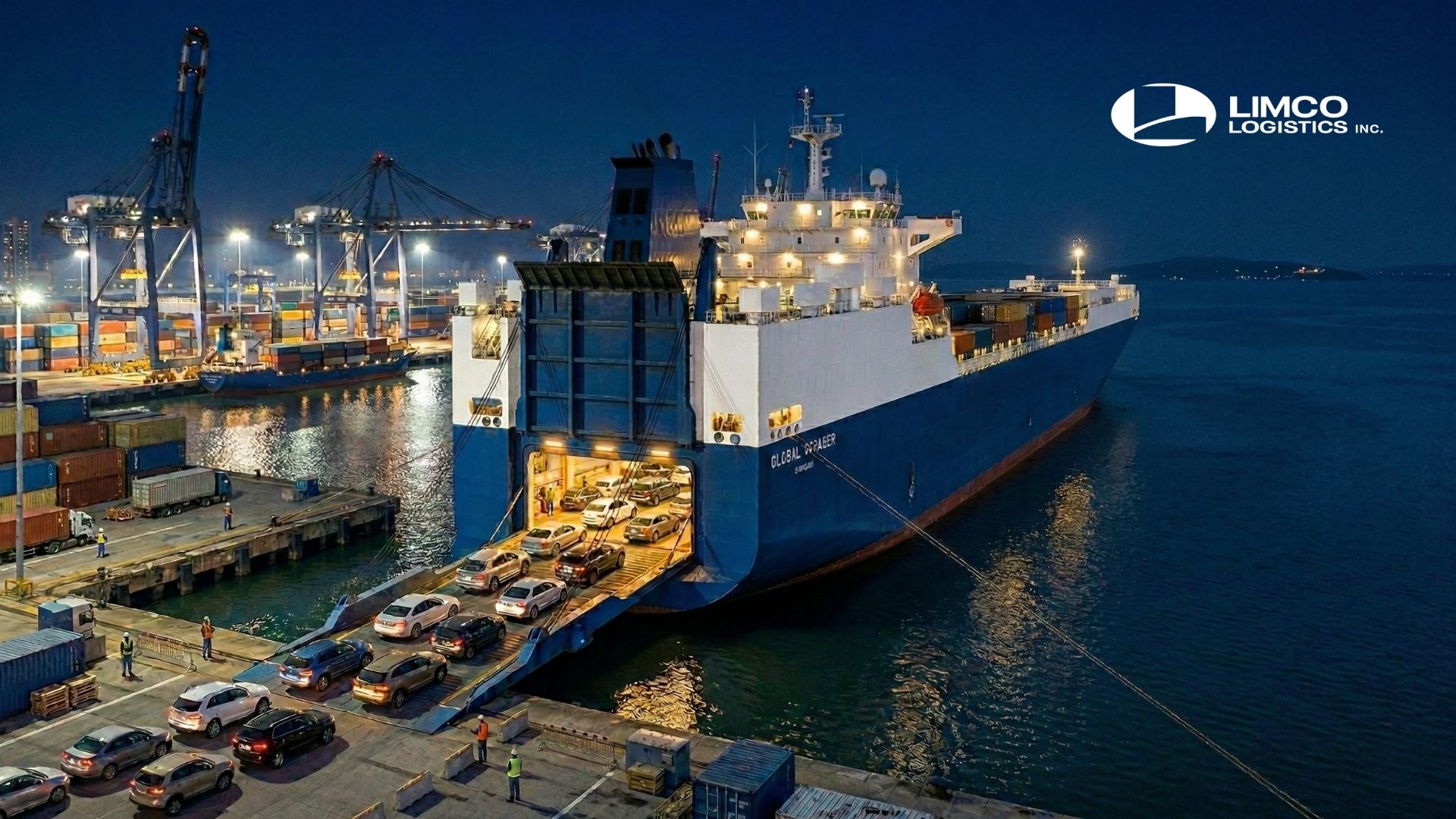
RoRo (Roll-on Roll-off) shipping is the standard method for transporting operational vehicles overseas. Your car is driven onto a purpose-built vessel at the origin port, secured to the car deck for the ocean voyage, and driven off at the destination port. The process requires the original vehicle title, an Electronic Export Information filing with US Customs, and submission of all documents at least 72 hours before departure. Transit times from the USA to Europe range from 10 to 21 days. Total all-in costs for a standard sedan typically fall between $1,500 and $3,500 depending on the route and service level.
Shipping a car overseas is a defined logistics process. It is not complicated when you understand the steps, but it does involve specific document requirements, port procedures, and vehicle preparation rules that cannot be overlooked. Missing a single document or delivering the car to the wrong terminal at the wrong time can result in a delayed shipment, storage charges, or a vessel cutoff.
RoRo shipping is the method that the global automotive and vehicle export industry was built on. More vehicles move internationally via Roll-on Roll-off vessels than by any other ocean freight method. The reason is straightforward: RoRo is designed specifically for wheeled cargo. The process is efficient, the cost is competitive, and the infrastructure at major ports worldwide is built to handle high volumes of vehicles at speed.
Limco Logistics has coordinated international vehicle shipments across more than 132 countries for over 20 years. This guide covers every stage of the RoRo process from booking to delivery, so you can approach your shipment with a clear picture of what to expect.
What Is RoRo Shipping?
RoRo is short for Roll-on Roll-off. It describes a class of ocean vessel specifically engineered to carry wheeled cargo, including cars, trucks, buses, motorcycles, motorhomes, tractors, and industrial machinery that moves on wheels or is placed on wheeled carriers for loading.
The defining feature of a RoRo vessel is its internal ramp system. Vehicles are driven up a stern ramp or side ramp directly onto the ship's car decks. Those decks are stacked in multiple levels inside the vessel, similar to a multi-level parking structure. Once loaded, vehicles are chained and lashed to the deck to prevent movement during the voyage. At the destination port, vehicles are driven back down the ramps and off the ship.
This drive-on, drive-off process eliminates the need for cranes, which makes loading and unloading faster and reduces the risk of handling damage that can occur when vehicles are lifted by slings or straps. Major RoRo carriers operate scheduled services between fixed port pairs on regular sailing frequencies, which makes capacity planning predictable for exporters and importers managing vehicle inventories.
Limco Logistics coordinates RoRo freight services for individual vehicle shipments, automotive industry exports, and commercial fleet movements across major global trade lanes. Major RoRo carrier operators on US export routes include Wallenius Wilhelmsen, Grimaldi, Hoegh, and K-Line, among others.
RoRo vs Container Shipping: Which Is Right for Your Vehicle?
Vehicle owners shipping a car overseas have two primary ocean freight options: RoRo or container shipping. Each has specific advantages, and the right choice depends on the vehicle type, condition, value, and destination.
| Factor | RoRo Shipping | Container Shipping |
|---|---|---|
| How the vehicle loads | Driven onto vessel under its own power via ramp | Loaded into a shipping container using ramps or forklifts |
| Vehicle condition required | Must be fully operational and driveable | Running or non-running vehicles accepted |
| Cost | Generally lower for standard vehicles | Higher per vehicle, but shared containers reduce cost for small vehicles |
| Security and exposure | Vehicles are on open car decks; multiple handlers have access | Sealed container; only opened at origin and destination |
| Personal belongings | Not permitted inside the vehicle | Permitted in most cases, with documented packing list |
| Port coverage | Fixed RoRo ports; not all destinations have RoRo service | Available at all major container ports worldwide |
| Best for | Operational cars, trucks, SUVs, commercial vehicles, heavy machinery | Classic cars, high-value vehicles, non-runners, motorcycles |
| Transit speed | Comparable; fixed sailing schedules on major lanes | Comparable; depends on route and carrier |
For operational standard vehicles moving to destinations served by major RoRo ports, RoRo is typically the cost-effective and practical choice. For high-value, classic, or non-running vehicles where security and cargo protection are the priority, container shipping is the more appropriate method regardless of cost difference.
How to Ship a Car Overseas via RoRo: Step by Step
The RoRo shipping process follows a defined sequence from the moment you request a quote to the moment your vehicle is released at the destination port. Each step has its own requirements and timeline. Understanding them in order prevents the most common causes of delay.
- Request a quote and confirm the route. Contact your freight forwarder with the vehicle details including make, model, year, dimensions, and weight, along with the origin city and destination country. Confirm which RoRo ports serve your destination and which departure port is most practical for your location. Limco Logistics provides ocean freight quotes covering the full RoRo service, including port handling and documentation coordination.
- Confirm the vessel schedule and book the sailing. RoRo vessels operate on fixed sailing schedules between port pairs. Once you select a departure, your freight forwarder secures space on the vessel. Vessel cut-off dates, which are the deadlines by which your vehicle must be at the port, are typically 3 to 5 days before the sailing date. Book early, particularly for peak periods such as end-of-quarter automotive export volumes.
- Prepare all export documents. This is the most critical step in the process. Missing or incorrect documentation is the leading cause of vehicle delays at US ports. Your freight forwarder coordinates the complete document package on your behalf. Full details are covered in the document section below.
- Prepare the vehicle for shipment. Complete all required vehicle preparation tasks before delivering the car to the port or designated vehicle processing facility. Full preparation requirements are listed in the vehicle preparation section of this guide.
- Deliver the vehicle to the designated port terminal. Your freight forwarder confirms the specific terminal, gate hours, and any vehicle check-in requirements at the origin port. Vehicles must be delivered by the confirmed cut-off date and time. Late delivery results in a rollover to the next available sailing and potential storage fees.
- US Customs export filing and clearance. All vehicle export documentation must be submitted to US Customs and Border Protection (CBP) at least 72 hours prior to departure. Limco Logistics files the Electronic Export Information (EEI) through the Automated Export System (AES) and coordinates with CBP to complete export clearance before the vessel sails.
- Ocean transit. Once the vessel departs, your vehicle is secured on the car deck for the voyage. Transit times vary by lane and are covered in the transit time section below. Limco Logistics provides tracking support during the voyage so you can monitor your shipment's status and estimated arrival.
- Destination port arrival and customs clearance. When the vessel arrives at the destination port, your vehicle goes through the destination country's import customs process. Import duties, VAT, and local compliance requirements vary significantly by country. Your freight forwarder coordinates with destination agents to handle customs clearance and arrange final delivery or port pickup.
Documents Required to Ship a Car Overseas from the USA
US Customs and Border Protection has strict documentation requirements for vehicle exports. According to CBP regulations under 19 CFR 192.2, all documents must be presented to CBP at the port of exportation. The filing deadline is at least 72 hours before the vessel departs.
Original Certificate of Title
The vehicle's Certificate of Title is the core document for any US car export. CBP requires the original title, not a photocopy. The title must be free of liens. If your vehicle is financed and a lien exists on the title, you must obtain a lien release letter from your lender on official company letterhead, specifically authorizing the export of the vehicle. This letter must include the full vehicle description including the VIN, the lienholder's contact information, and an original authorized signature.
Electronic Export Information (EEI) Filing
All vehicle exports from the USA require an Electronic Export Information filing submitted through the Automated Export System (AES) or the Automated Commercial Environment (ACE). This filing generates an Internal Transaction Number (ITN) that must accompany the vehicle when it is presented to CBP for inspection. Your freight forwarder files this on your behalf as part of the export service.
Government-Issued Photo ID
A valid passport or driver's license is required to confirm the identity of the exporter or their authorized agent.
Bill of Lading
The ocean carrier issues the Bill of Lading once the vehicle is booked and accepted at the port terminal. This is the primary shipping document and the legal receipt for the cargo. For vehicle shipments, understanding the Bill of Lading terms and conditions matters, particularly regarding carrier liability limits during ocean transit.
Additional Documents by Situation
Certain situations require supplementary documents. If the vehicle is being exported by a company rather than an individual, a notarized statement on company letterhead confirming the authorized signatory is required. For vehicles purchased at US auctions, the auction lot number, buyer information, and VIN must be provided to prevent clearance delays. Some destination countries also require a commercial invoice showing the vehicle's declared value.
How to Prepare Your Car for RoRo Shipping
Vehicle preparation for RoRo shipment is not optional. Port terminals and vessel operators have firm requirements that apply to every vehicle on the car deck. Arriving at the terminal with a vehicle that does not meet these requirements will result in the shipment being refused.
Fuel level
Reduce the fuel tank to approximately one quarter capacity before delivering the vehicle to the port. Most RoRo carriers require a fuel level between 10 and 25 percent. Excess fuel is a fire safety risk on enclosed car decks. Some terminals will test fuel levels and refuse vehicles that are overfilled.
Remove all personal belongings
No personal items, luggage, tools, or valuables may be left inside the vehicle. During RoRo transport, the vehicle is accessible to terminal staff and vessel crew at multiple points during loading, securing, and unloading. CBP may also inspect the vehicle before departure. Any personal items found inside can be removed or cause the shipment to be flagged for inspection, which creates delays and potential customs complications.
Deactivate the alarm system
Disable the vehicle's alarm before delivery. A car alarm that triggers during transit on the vessel creates a disruption that can result in additional charges from the carrier and potential damage if the alarm discharge affects the vehicle's battery. Provide a spare key to the shipping company so the vehicle can be moved as required at origin and destination terminals.
Battery and fluid check
Ensure the vehicle starts reliably and that there are no fluid leaks. Oil, coolant, or fuel leaks are a fire and contamination risk and will result in the vehicle being rejected at the terminal. Check tire pressure, as proper inflation prevents damage during ramp loading and unloading. A basic mechanical check before delivery is a practical step for any vehicle being transported on a long ocean voyage.
Document pre-existing condition
Photograph the entire vehicle thoroughly before delivery, covering all four sides, the roof, the interior, and any existing scratches or damage. Share this documentation with your freight forwarder and retain your own copies. This record establishes the pre-shipment condition and protects your ability to file a damage claim if the vehicle arrives at the destination in a different condition.
Wash the vehicle
US Department of Agriculture regulations require that the undercarriage of imported vehicles be free of foreign soil. Many carriers recommend washing the vehicle before export to ensure compliance with similar inspection requirements at the destination country. A clean vehicle also makes pre-shipment condition documentation more effective.
What Determines the Cost of Shipping a Car Overseas via RoRo?
RoRo shipping costs are not a fixed number. Every vehicle shipment is priced individually based on a combination of factors that interact differently for each movement. Understanding what drives the cost helps you ask the right questions when requesting a quote and avoids unexpected charges when the invoice arrives at destination.
Vehicle dimensions and weight
RoRo carriers price vehicle space based on the physical footprint the vehicle occupies on the car deck, measured in length, width, and height. A compact sedan occupies significantly less deck space than a full-size SUV, a pickup truck, or a commercial vehicle. Larger dimensional footprints increase the base freight charge. Vehicles that exceed standard height limits for enclosed car decks may also require specialized handling or different vessel sections, which affects pricing.
Origin and destination ports
The specific port pair drives a substantial portion of the cost. East Coast US ports have different rate structures than Gulf Coast or West Coast ports. Destinations with high sailing frequency and well-developed RoRo terminal infrastructure tend to have more competitive rates than lower-volume or remote port calls. Some destinations require transhipment, meaning the vehicle transfers between vessels at an intermediate port, which adds cost and transit time.
Current carrier rates and market conditions
Ocean freight rates on any lane fluctuate with vessel capacity, fuel prices, seasonal demand, and global supply chain conditions. The rate applicable to your shipment is determined at the time of booking, not at the time of inquiry. A quote obtained today may not reflect the rate available in four weeks. Booking early and confirming the rate with your freight forwarder protects against market movements before the vessel departs.
Scope of services required
The base ocean freight is one component of the total cost. A complete all-in quotation for an international vehicle shipment also includes origin port handling and terminal fees, export customs filing through the Automated Export System, inland transport from the vehicle's location to the origin port, destination terminal charges, destination customs clearance coordination, and applicable import duties or taxes at the destination country. Each component is separate. Comparing quotes that do not include the same scope leads to inaccurate cost assessments.
Marine cargo insurance
Standard RoRo carrier liability under international maritime conventions is limited and rarely reflects the full value of the vehicle being shipped. Marine cargo insurance is a separate purchase that protects the declared value of your vehicle from origin terminal entry through destination port release. For any vehicle with meaningful resale or sentimental value, it is a necessary cost to factor into the full shipment budget. Your freight forwarder coordinates insurance options as part of the overall service.
Destination country import duties and taxes
Import duties and VAT at the destination are entirely separate from freight costs and are imposed by the destination government, not the carrier or freight forwarder. These charges vary significantly by country, vehicle age, vehicle value, and the applicable trade agreement between the USA and the destination country. Some countries offer duty exemptions for returning residents or vehicles above a certain age. Researching destination duty structures before committing to a shipment is essential for accurate total cost planning.
Limco Logistics provides detailed, itemized quotes that separate each cost component clearly, so you have a complete picture of the all-in cost before the vehicle leaves. Request a quote through Limco's freight inquiry form with your vehicle specifications, origin location, and destination to receive an accurate estimate tailored to your specific shipment.
RoRo Transit Times: What Affects How Long Your Vehicle Takes to Arrive
Transit time for an international vehicle shipment is not a single fixed number. It is the result of several variables that interact differently for each route and each booking. Knowing what influences transit time helps you set realistic delivery expectations and plan for the full door-to-door timeline rather than just the ocean voyage.
The ocean voyage itself
The vessel transit time between origin and destination ports is determined by the route, the specific carrier, and the vessel's scheduled itinerary. Some RoRo services are direct port-to-port sailings, which are faster. Others include intermediate port calls where the vessel stops to load and discharge other cargo before reaching your destination. Direct services are generally preferable when available on your lane. Your freight forwarder confirms the sailing itinerary and the number of port calls when booking the vessel space.
Origin port processing before departure
The total timeline begins before the vessel sails. After the vehicle is delivered to the origin port terminal, it goes through check-in, inspection, customs document review, and loading coordination before it physically rolls onto the vessel. This pre-departure window adds days to the overall timeline and is why vessel cut-off dates typically fall several days before the sailing date. Missing the cut-off means waiting for the next available sailing on that lane.
Origin port location in the USA
The departure port has a direct impact on transit time to any given destination. East Coast US ports including Baltimore, Brunswick, and Jacksonville are closer to European, African, and Middle Eastern destinations, which generally means shorter ocean transit than sailing from Gulf Coast or West Coast ports on those same routes. For Asia-Pacific destinations, West Coast ports such as Long Beach and Tacoma typically have the advantage. Limco Logistics advises on the most practical origin port for each destination based on your vehicle's location and the available sailing schedule.
Destination port and customs clearance
After the vessel arrives, the vehicle does not transfer immediately. It must be offloaded, inspected by destination port authorities, and cleared through the destination country's import customs process before it is released for pickup or onward delivery. Customs clearance timelines vary by country, the completeness of the documentation submitted, and whether the shipment is selected for physical inspection. Destination countries with efficient customs processing at high-volume RoRo terminals release vehicles faster than those with manual or multi-stage inspection procedures.
Sailing frequency on the lane
Some trade lanes have multiple RoRo sailings per week, which means a missed vessel does not result in a long wait for the next departure. Other lanes, particularly those serving smaller or more specialized markets, may have only one or two sailings per month. Sailing frequency on your specific route affects how much scheduling flexibility you have and how quickly a vehicle can move if documentation issues cause a delay at origin.
Limco Logistics confirms the specific sailing schedule, estimated transit time, and total door-to-door timeline for each shipment at the point of booking. Because vessel schedules and port processing times change with market conditions and carrier operations, the accurate timeline for your vehicle is always provided as part of the confirmed booking rather than as a general estimate. Limco's tracking service keeps you informed of the shipment's position and any schedule adjustments throughout the voyage.
Major US RoRo Export Ports
Not every US seaport handles RoRo traffic. RoRo vessels require specialized terminals with dedicated car processing facilities, secure vehicle storage, and ramp infrastructure. The primary US ports with active RoRo export services are:
- Baltimore, MD (Port of Baltimore): One of the largest vehicle handling ports in the United States. Strong direct service to European and Middle Eastern destinations.
- Brunswick, GA (Port of Brunswick / Colonel's Island): A major automotive export hub on the Southeast US coast with extensive RoRo infrastructure and high sailing frequency to Europe and South America.
- Jacksonville, FL: Well-positioned for exports to Europe, Africa, and Latin America. Proximity to Miami makes it a practical option for Southeast US vehicle exports coordinated through Limco Logistics.
- Newark, NJ / Port Newark: Serves the Northeast US market with sailings to European and West African destinations.
- Houston, TX / Galveston, TX: Primary RoRo port for exports to West Africa, the Middle East, and Latin America from the Gulf Coast region.
- Long Beach, CA / Tacoma, WA: West Coast RoRo options for vehicles destined for Asia-Pacific markets including Japan, South Korea, Australia, and New Zealand.
What Types of Vehicles Can Be Shipped via RoRo?
RoRo is not limited to passenger cars. The vessel class is engineered to handle a wide range of wheeled and self-propelled cargo. Limco Logistics coordinates RoRo shipments for all of the following vehicle and equipment categories through its automotive industry freight services:
- Passenger cars and sedans (operational)
- SUVs, crossovers, and pickup trucks
- Commercial trucks, vans, and buses
- Motorcycles (typically shipped via container due to size)
- Motorhomes and campervans
- Agricultural tractors and farm equipment
- Construction machinery including excavators, graders, and compactors
- Industrial wheeled equipment and forklifts
- Military vehicles
Non-self-propelled machinery and equipment that cannot be driven onto the vessel is loaded onto wheeled carriers (MAFI trailers) at the terminal and rolled onto the ship using terminal tractors. This category covers many types of construction and heavy machinery that move internationally on RoRo vessels despite not being self-propelled. Heavy equipment that exceeds RoRo vessel specifications may require breakbulk or flat rack container solutions instead.
Ready to Ship Your Vehicle Overseas?
Limco Logistics handles RoRo bookings, export documentation, customs filing, and destination coordination across more than 132 countries. Share your vehicle details and destination for an itemized quote.
Request a Free RoRo QuoteMarine Cargo Insurance for RoRo Shipments
Marine cargo insurance is not included in the standard RoRo carrier contract. Ocean carriers operate under international maritime liability conventions that set strict limits on their financial responsibility for vehicle damage during transit. These limits are typically calculated per unit or per kilogram of cargo, and they are almost always lower than the actual market value of the vehicle being shipped.
For any vehicle with meaningful resale or replacement value, purchasing a dedicated marine cargo insurance policy is the correct approach. This coverage is calculated as a percentage of the declared value of the vehicle and protects against loss or damage from the point the vehicle enters the terminal at origin through delivery at the destination port. The applicable rate depends on the vehicle value, the route, and the policy terms agreed with the insurer.
When obtaining insurance, declare the full replacement value of the vehicle, not a discounted figure. Insurance shortfalls become real financial problems if a claim is necessary. Your freight forwarder coordinates insurance options as part of the overall shipment service.
Incoterms and Who Pays for What in Vehicle Exports
The Incoterm agreed between buyer and seller determines which party is responsible for freight costs, insurance, and customs charges at each stage of the vehicle shipment. This is particularly relevant for commercial vehicle exports where a US dealer or exporter is selling a vehicle to a foreign buyer.
Under FOB (Free on Board) terms, the seller's responsibility ends when the vehicle is loaded onto the vessel at the origin port. The buyer arranges and pays for ocean freight and all destination costs. Under CIF (Cost, Insurance, and Freight), the seller pays ocean freight and insurance to the destination port, after which costs shift to the buyer. For vehicle exports where the seller wants to control the full logistics chain, understanding how each Incoterm shifts financial responsibility is important before quoting a landed price to a foreign buyer.
Limco's Incoterms reference guide provides a detailed breakdown of each term and the cost responsibilities it creates, which is a useful starting point for exporters pricing international vehicle transactions.
How Limco Logistics Coordinates RoRo Vehicle Shipments
Shipping a car overseas involves coordination across multiple parties: the vehicle owner or exporter, the origin port terminal, the ocean carrier, US Customs, the destination port agent, and the destination customs authority. Managing this chain without experience creates real risk at every handoff point.
Limco Logistics structures RoRo vehicle shipments as a managed logistics service, not a simple booking transaction. The process begins with a documented quote that covers all cost components. It continues through vessel booking, document preparation and customs filing, vehicle delivery coordination, and tracking during transit. At destination, Limco works with established local agents in each country to coordinate customs clearance and final release of the vehicle.
For exporters and importers moving multiple vehicles, Limco coordinates the scheduling, documentation, and port logistics across the entire batch, which reduces per-unit administrative cost and ensures consistent handling across all vehicles in the shipment.
Understanding how vehicle movements fit into the broader global freight system is also useful context for exporters managing complex supply chains. The guide on how cargo moves across international trade networks covers the infrastructure and coordination layers that every international shipment, including vehicle exports, depends on.
For exporters evaluating whether their vehicle should move via RoRo or in a shipping container, the comparison of LCL vs FCL ocean freight covers the underlying logic for choosing between shared and exclusive container options, which applies when a vehicle cannot move via RoRo due to its condition or dimensions.
Frequently Asked Questions
What is RoRo shipping and how does it work for cars?
RoRo stands for Roll-on Roll-off. It is an ocean freight method where vehicles are driven directly onto a specialized vessel using built-in ramps and secured to the car deck for the voyage. At the destination port, vehicles are driven off under their own power. RoRo is designed for self-propelled vehicles including cars, trucks, buses, and wheeled machinery. It is one of the most cost-effective and widely used methods for shipping vehicles internationally.
How much does it cost to ship a car overseas using RoRo?
RoRo shipping costs depend on vehicle dimensions and weight, origin port, destination port, current carrier rates on the lane, and the full scope of services required. The base ocean freight is one part of the total cost. Additional components include origin port handling, export customs filing, inland transport to the port, destination terminal charges, destination customs clearance, and applicable import duties or taxes. Because every shipment is different, the accurate figure for your vehicle is an itemized quote from your freight forwarder based on your specific route and service requirements.
What documents are needed to ship a car overseas from the USA?
You need the original Certificate of Title free of liens (or accompanied by a lien release letter), a valid government-issued photo ID, an Electronic Export Information (EEI) filing through the Automated Export System (AES), and the Bill of Lading issued by the ocean carrier. All documents must be submitted to US Customs and Border Protection at least 72 hours before the vessel departs. Your freight forwarder prepares and files the complete document package on your behalf.
Does the car need to be running to ship via RoRo?
Yes. RoRo shipping strictly requires that vehicles be fully operational and capable of being driven onto and off the vessel under their own power. Non-running, salvage, or inoperable vehicles cannot be shipped via RoRo and must be shipped in a container using a flat rack or enclosed container depending on dimensions and vehicle condition. Your freight forwarder advises on the correct method for non-running vehicles.
Can I put personal belongings inside my car during RoRo shipping?
No. Personal belongings are not permitted inside vehicles shipped via RoRo. During transport, multiple parties have access to the car deck. Customs authorities may also inspect the vehicle at origin and destination. Placing personal items in a RoRo-shipped vehicle risks loss, customs seizure, and potential penalties. Remove all personal items and valuables before delivering the vehicle to the port terminal.
How long does RoRo shipping take from the USA to Europe?
RoRo transit times from the USA to Europe depend on the origin port, destination port, carrier, and sailing schedule. East Coast US ports such as Baltimore, Jacksonville, and Brunswick generally connect faster to major European RoRo hubs including Bremerhaven, Rotterdam, Southampton, and Antwerp than West Coast ports do. The total door-to-door timeline also includes pre-departure vehicle processing at the origin terminal and post-arrival customs clearance at destination. Limco Logistics confirms the specific transit estimate for your route at the time of booking.
What to Know Before You Book Your Vehicle Shipment
The most common mistakes in international vehicle shipping are all preventable: missing the vessel cut-off because documents were submitted late, having the vehicle refused at the terminal because the fuel level was too high, or arriving at destination with no customs broker arranged. Each of these has a real cost in storage fees, rebooking charges, and delays.
Booking early, assembling all documents before the vessel cut-off deadline, and working with a freight forwarder who manages the full process from origin to destination are the factors that determine whether your vehicle arrives on schedule and without complications.
Limco Logistics has coordinated vehicle exports from the USA to destinations across Europe, Africa, the Middle East, Asia, and Latin America for over 20 years. The service covers the entire process: vessel booking, document preparation and export customs filing, vehicle delivery coordination, tracking during transit, and destination port release through established local agents.
Ship Your Vehicle Overseas with Limco Logistics
Get a detailed, itemized quote covering all costs from origin to destination. Limco Logistics serves vehicle exporters and importers across more than 132 countries with RoRo and container shipping solutions matched to your specific vehicle and route.
Get Your Free Vehicle Shipping Quote