
LCL vs FCL Shipping: Which Ocean Freight Option Is Right for Your Cargo?
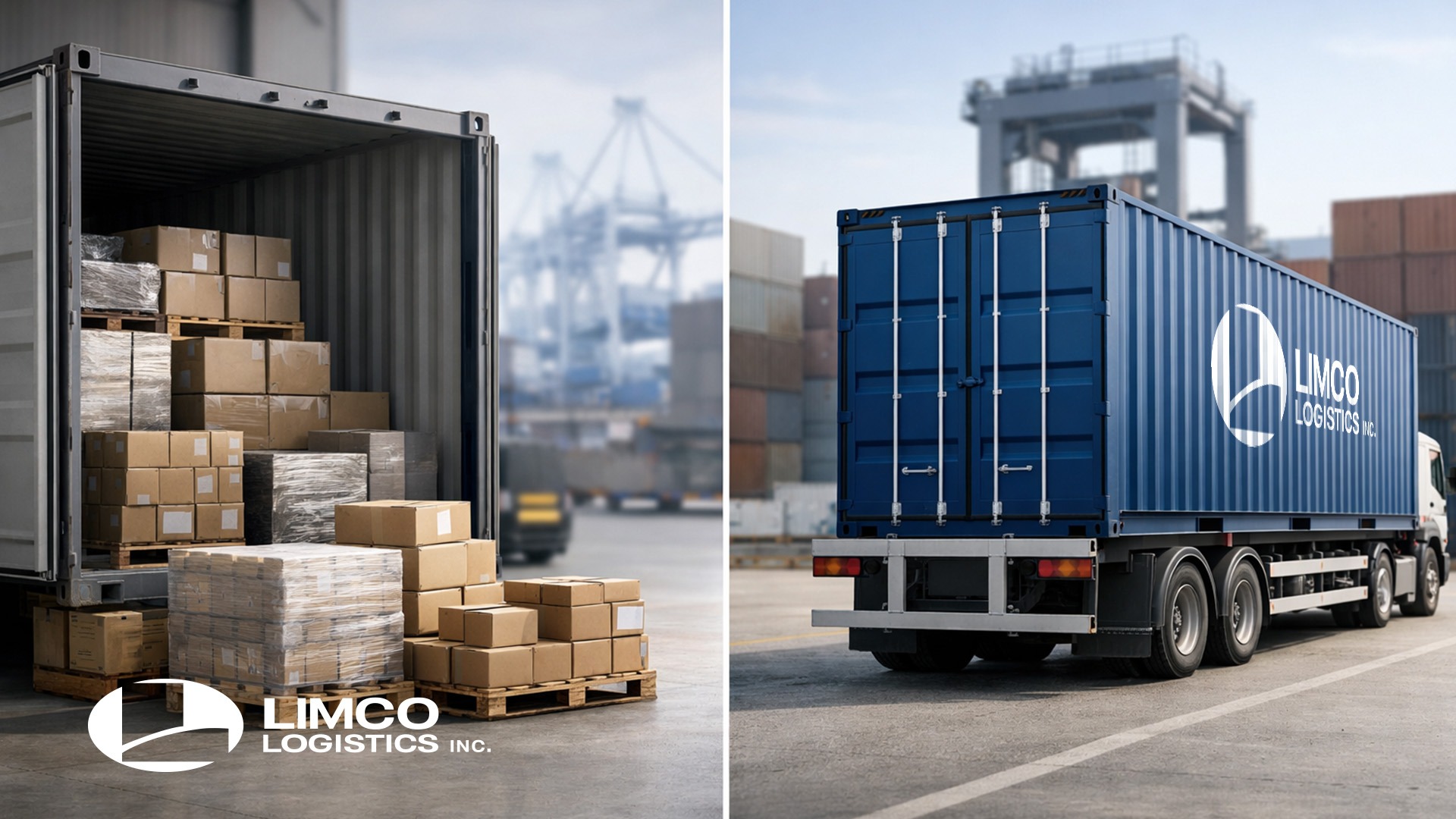
LCL (Less than Container Load) consolidates your cargo with other shipments in a shared container. You pay only for the space your goods occupy, measured in cubic meters. FCL (Full Container Load) gives you exclusive use of an entire container. LCL is typically the right choice for shipments under 15 CBM. FCL becomes more cost-effective and faster above that threshold. The right option depends on your cargo volume, required transit time, and the nature of the goods you are moving.
Every importer and exporter reaches this question at some point: should I book an LCL shipment or go with a full container? It is one of the most practical decisions in ocean freight, and getting it wrong adds real cost to every shipment. Pay for container space you do not need, and you overspend on FCL. Underestimate your volume and book LCL at peak rates, and the per-unit cost climbs higher than expected.
The answer is not the same for every shipper. It depends on how much you are moving, how fast it needs to arrive, and what the goods are. This guide breaks both options down so you can make the right call before you book.
Limco Logistics has coordinated both LCL and FCL ocean freight movements for importers and exporters across more than 132 countries for over 20 years. The comparison below reflects how these decisions play out in practice across major trade lanes including Asia to USA, Europe to USA, and Latin America to USA corridors.
What Is LCL Shipping?
LCL stands for Less than Container Load. It means your cargo does not fill an entire shipping container on its own. Instead, a freight forwarder consolidates your goods with shipments from other companies, all heading in the same direction, into one shared container.
You pay for the cubic meters (CBM) your cargo occupies, not for the container itself. This makes LCL the practical choice when you have a smaller shipment that cannot justify exclusive container use.
At the origin port, a consolidation station (CFS, or Container Freight Station) receives cargo from multiple shippers, loads and secures it in a single container, and releases it to the vessel. At the destination port, the container goes to a deconsolidation station where your goods are separated from the others and made available for customs clearance and pickup.
That consolidation and deconsolidation process adds time to the movement, which is the primary tradeoff with LCL shipping. It also means your cargo shares handling points with other goods, which introduces a small degree of additional risk compared to an exclusive container. For most standard commercial cargo, this is well within acceptable parameters. For fragile, high-value, or sensitive goods, it is worth factoring into your decision.
Limco Logistics manages LCL freight services across major consolidation hubs, including trans-Pacific and transatlantic lanes, coordinating cargo groupage with established consolidators to keep your cost per CBM competitive even on smaller volumes.
What Is FCL Shipping?
FCL stands for Full Container Load. When you book an FCL shipment, you have exclusive use of the entire container, whether it is completely full or only partially loaded. The container is sealed at the origin facility and not opened until it reaches its destination, which means your goods are not handled alongside anyone else's cargo at any intermediate point.
FCL containers come in standard sizes. The most common options are the 20-foot standard container (approximately 25 to 28 CBM of usable volume), the 40-foot standard container (approximately 55 to 58 CBM), and the 40-foot High Cube container (approximately 60 to 68 CBM). Specialty options like open-top, flat rack, and refrigerated containers are also available for cargo with specific dimensional or temperature requirements.
Because the container is sealed end to end, FCL shipments clear customs faster at destination ports. Customs authorities process an entire container as a single consignment rather than sorting through consolidated goods from multiple shippers. This alone can reduce port dwell time by two to four days on busy lanes.
Limco Logistics coordinates FCL freight bookings with carrier partners including Maersk, MSC, Evergreen, Hapag-Lloyd, and COSCO, providing access to vessel capacity across a wide network of global trade routes.
LCL vs FCL: A Direct Comparison
The table below covers the key decision factors. Each row addresses a practical question that shippers need answered before choosing an option.
| Factor | LCL (Less than Container Load) | FCL (Full Container Load) |
|---|---|---|
| How cost is calculated | Per cubic meter (CBM) or per metric ton, whichever is higher | Flat rate per container, regardless of how full it is |
| Typical best-fit volume | Under 15 CBM | Above 15 CBM for a 20ft; above 25 CBM for a 40ft |
| Cargo handling | Handled at CFS at origin and destination alongside other shippers' goods | Sealed at origin, not opened until destination |
| Transit time | Longer: add 3 to 7 days for consolidation and deconsolidation | Shorter: direct port-to-port movement once loaded |
| Customs clearance | More steps: deconsolidation before clearance | Faster: entire container processed as one consignment |
| Risk level | Slightly higher: multiple handling points, co-loading risk | Lower: sealed container, no third-party cargo contact |
| Cargo types best suited | Non-fragile commercial goods, sample shipments, trial orders | High-value goods, fragile cargo, full production runs |
| Minimum shipment size | No strict minimum, though most consolidators have a floor of 0.5 CBM | One full container, regardless of actual cargo volume |
| Booking flexibility | More flexible: consolidators run regular sailings from major hubs | Less flexible: subject to vessel schedule and capacity availability |
| Cargo security | Standard commercial security | Higher: exclusive container, sealed, no co-loading |
When LCL Is the Right Choice
LCL shipping solves a specific problem: you have cargo that needs to move, but not enough of it to justify paying for a full container. These are the situations where LCL consistently makes sense.
Your cargo volume is under 15 CBM
This is the simplest rule. If your shipment occupies less than roughly half of a 20-foot container, LCL will almost always be cheaper. Booking a full 20-foot container for 8 CBM of goods means paying for 17 to 20 CBM of empty space. LCL lets you pay for what you actually have.
You are running a trial or test order
Importers testing a new supplier, launching a product in a new market, or running a smaller initial production run benefit from LCL because it keeps the financial commitment proportional to the order size. There is no reason to pay for a full container when the order is designed to validate, not scale.
You ship frequently in smaller volumes
Some businesses maintain consistent inventory levels by shipping smaller quantities more frequently rather than consolidating orders into large periodic container loads. For this model, LCL is often the operational fit, even if the per-CBM rate is slightly higher than FCL, because it supports tighter inventory cycles and reduces warehousing needs.
Your cargo is non-fragile commercial goods
Packaged consumer goods, industrial components, textiles, and other standard commercial products move through LCL consolidation without difficulty. The handling process at CFS facilities is routine and the risk profile is acceptable for cargo that does not require special protection.
When FCL Is the Right Choice
FCL gives you control. The container is yours from the moment it is loaded until it reaches its destination. For the right cargo type and volume, that control is worth paying for.
Your cargo volume is above 15 to 20 CBM
Once you cross the 15 CBM threshold for a 20-foot container, the per-CBM cost of booking FCL typically becomes competitive with or lower than LCL rates on the same lane. Above 20 CBM, FCL is almost always the more economical choice, and you gain the additional benefits of faster transit and reduced handling risk.
You are shipping high-value or fragile goods
Electronics, precision machinery, fine art, luxury goods, and pharmaceutical products benefit from the sealed container environment that FCL provides. When cargo cannot afford damage from co-loading or additional handling at consolidation facilities, FCL is the appropriate choice regardless of volume.
You need the fastest possible transit
FCL shipments move directly from port to port without the additional consolidation and deconsolidation steps that LCL requires. On the Asia to USA West Coast lane, for example, an FCL shipment may arrive and clear customs two to five days faster than an equivalent LCL movement on the same vessel. When delivery deadlines are fixed, those days matter.
Your goods require full container conditions
Certain cargo categories, including temperature-sensitive products moving in refrigerated freight containers, oversized items that cannot be co-loaded, or goods that require a specific container type such as open-top or flat rack, will need an exclusive container regardless of volume. These shipments always move as FCL by nature of the cargo requirements.
How to Calculate Whether LCL or FCL Is Cheaper for Your Shipment
The calculation is straightforward once you know your cargo volume and the current market rate for both options on your specific trade lane.
Follow these steps:
- Measure your cargo volume in CBM. Length (m) x Width (m) x Height (m) = CBM per carton or pallet. Add up all units to get total CBM. If your cargo is heavy relative to its size, also calculate gross weight in metric tons. The chargeable LCL rate applies to whichever is higher: CBM or metric ton equivalent.
- Get the current LCL rate for your lane. LCL rates are quoted per CBM (or per revenue ton). Multiply that rate by your total CBM to get your estimated LCL freight cost. Remember to add origin CFS charges, destination CFS charges, and deconsolidation fees, which are separate from the base LCL rate.
- Get the current FCL rate for your lane. FCL rates are quoted per container (20ft or 40ft). This is your total freight cost for that container, regardless of how much space you use.
- Compare the two totals. If your LCL all-in cost is lower than the FCL rate, LCL is the more economical option. If the FCL rate is close to or lower than your calculated LCL total, FCL is worth the upgrade for the speed and security benefits it provides.
- Factor in non-freight costs. LCL adds CFS handling charges at both ends, which typically range from USD 50 to USD 150 per CBM depending on the port. FCL has chassis fees, container seal fees, and terminal handling charges instead. Both need to be included in a full cost comparison.
The general industry benchmark: at 15 CBM on most major trade lanes, LCL and FCL costs are roughly equivalent. Below that volume, LCL wins on cost. Above it, FCL becomes the better financial and operational choice.
Understanding how container dimensions and capacity work is useful when doing this calculation, particularly if you are comparing a 20-foot against a 40-foot option for cargo volumes between 15 and 30 CBM.
LCL vs FCL Transit Times on Major Trade Lanes
Transit times vary by origin, destination, carrier, and routing. The figures below represent realistic ranges on the most common lanes Limco Logistics serves, including both vessel transit and port processing time. LCL figures include consolidation at origin and deconsolidation at destination.
| Trade Lane | FCL Transit (port to port) | LCL Transit (door to available) |
|---|---|---|
| China / Shanghai to USA West Coast (Los Angeles) | 14 to 18 days | 20 to 28 days |
| China / Shanghai to USA East Coast (Miami / New York) | 24 to 32 days | 30 to 40 days |
| Europe (Rotterdam / Hamburg) to USA East Coast | 10 to 15 days | 16 to 22 days |
| Latin America (Colombia / Brazil) to USA | 7 to 14 days | 12 to 20 days |
| India to USA East Coast | 22 to 30 days | 28 to 38 days |
These are port-to-port vessel transit times plus standard processing. Delays caused by customs holds, port congestion, or vessel schedule changes can extend these windows on any lane. Limco Logistics provides real-time shipment status through its cargo tracking system , so you are always informed of your shipment's current position and estimated arrival.
How Limco Logistics Manages LCL and FCL Ocean Freight
Whether a shipment moves as LCL or FCL, the coordination requirements are similar: carrier booking, documentation preparation, customs compliance, and inland transport at both ends. What changes is the handling model at the container level.
For LCL shipments, Limco Logistics works with established consolidators at major origin ports to group your cargo with compatible goods heading to the same destination region. The documentation package includes a House Bill of Lading, packing list, commercial invoice, and any required certificates of origin or inspection documents. Customs entries are prepared and submitted in advance of vessel arrival.
For FCL shipments, Limco coordinates directly with ocean carriers across its network, which includes Maersk, MSC, Hapag-Lloyd, Evergreen, COSCO, OOCL, and Ocean Network Express. Container booking, seal issuance, and Bill of Lading preparation are managed as part of the standard service. For shipments with specific cargo requirements, such as hazardous materials declarations or phytosanitary certificates for agricultural goods, compliance documentation is coordinated through Limco's team.
The right choice between LCL and FCL is rarely obvious from the rate sheet alone. Limco Logistics provides both options and helps clients select the one that fits their volume, timeline, and cargo type, without the incentive to push a higher-cost option when a lower-cost one is more appropriate.
For a detailed look at how ocean freight fits into a broader international trade strategy, the guide on how cargo moves across global trade networks covers the full logistics chain from manufacturer to final destination.
Understanding the full documentation chain is equally important. Limco's Bill of Lading terms and conditions reference covers the legal obligations attached to every ocean freight movement, for both LCL and FCL shipments.
Not Sure Whether LCL or FCL Is Right for Your Shipment?
Share your cargo details with Limco Logistics. Our team will review your volume, destination, and timeline and give you a clear recommendation with a competitive rate for both options.
Request a Free Ocean Freight QuoteOne More Factor: Your Incoterms Affect Both LCL and FCL Costs
The Incoterm you agree on with your supplier or buyer determines which party pays for freight, insurance, and customs at each stage of the shipment. This applies equally to LCL and FCL movements and can significantly affect your total landed cost.
For example, under FOB (Free on Board), the seller delivers cargo to the origin port and the buyer arranges and pays for ocean freight and destination charges. Under DDP (Delivered Duty Paid), the seller covers all costs including duties at the destination country. The freight mode choice, LCL or FCL, sits within the broader cost structure that Incoterms define.
If you are evaluating the full cost of an international shipment, Limco's Incoterms reference guide is a useful starting point for understanding which terms shift cost responsibility and how that interacts with your freight booking.
Frequently Asked Questions
What is the difference between LCL and FCL shipping?
LCL (Less than Container Load) means your cargo shares container space with other shippers' goods, and you pay only for the cubic meters your shipment occupies. FCL (Full Container Load) gives you exclusive use of an entire container, regardless of how full it is. LCL suits smaller shipments, while FCL is more cost-effective and secure for larger cargo volumes above approximately 15 CBM.
When should I use LCL shipping instead of FCL?
LCL shipping is the better choice when your cargo volume is under 15 CBM, when you are testing a new product or supplier with a smaller trial order, when you cannot fill an entire container, or when cash flow makes paying for unused container space impractical. LCL allows you to ship only what you have rather than waiting to accumulate a full container load.
Is LCL or FCL cheaper for a 10 CBM shipment?
For a 10 CBM shipment, LCL is almost always cheaper than FCL. A standard 20-foot container holds approximately 25 to 28 CBM. Booking a full container for 10 CBM means paying for 15 to 18 CBM of empty space. With LCL, you pay only for the 10 CBM your cargo occupies, making it the economical choice for smaller volumes on most trade lanes.
How much longer does LCL take compared to FCL?
LCL shipments typically add 3 to 7 days to the total transit time compared to FCL on the same trade lane. This extra time accounts for cargo consolidation at the origin port and deconsolidation at the destination port. On the Asia to USA corridor, an FCL shipment may take 25 to 35 days, while LCL on the same lane typically runs 30 to 42 days.
What documents are required for LCL and FCL ocean freight?
Both LCL and FCL shipments require a Bill of Lading, commercial invoice, packing list, and a certificate of origin where applicable. FCL shipments may also require a container seal certificate. For regulated goods, you may need additional permits or inspection certificates. Your freight forwarder handles document preparation and coordinates customs submission at both origin and destination.
At what cargo volume does FCL become cheaper than LCL?
The breakeven point between LCL and FCL is generally around 15 CBM for a 20-foot container and 25 CBM for a 40-foot container, though this varies by trade lane, carrier, and current market rates. Above these thresholds, the per-CBM rate of an FCL booking typically becomes more competitive than consolidated LCL rates, and you gain faster transit and lower cargo handling risk.
Choosing Between LCL and FCL: The Short Version
The decision comes down to three variables: how much cargo you have, how fast it needs to arrive, and what the goods are worth relative to the risk of co-loading.
Under 15 CBM, LCL is the standard choice for cost-conscious shippers who can accept the additional transit days. Above 15 CBM, FCL delivers better value per unit of cargo along with faster transit and a sealed container environment. High-value and fragile goods move as FCL regardless of volume, because the cargo itself justifies the cost of an exclusive container.
Limco Logistics handles both. The team reviews your specific shipment details, including volume, commodity type, origin, and destination, and recommends the option that delivers the right balance of cost and transit for your supply chain requirements.
If you are also comparing ocean freight against air freight for a time-sensitive shipment, Limco's international air freight services are available for cargo that cannot accept the transit times that ocean freight requires.
Get a Competitive Rate for Your LCL or FCL Shipment
Limco Logistics serves importers and exporters across more than 132 countries with ocean freight solutions that are matched to your actual cargo, not a one-size-fits-all rate sheet.
Request Your Free Quote Today
