
Enterprise RoRo Capacity Planning After Supreme Court Tariff Rulings: Managing Volume, Vessel Allocation and Port Risk Across Global Trade Lanes
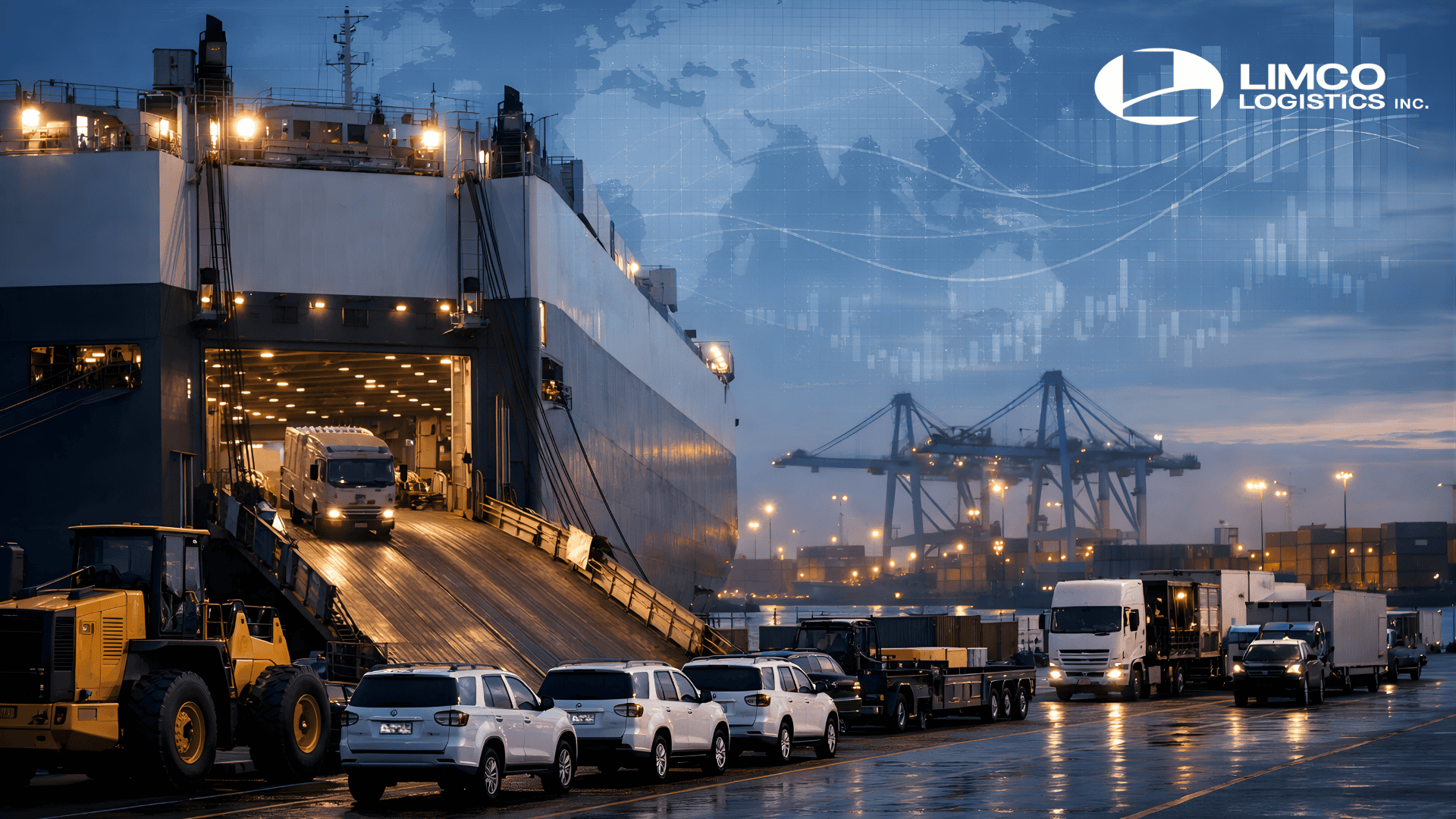
Recent Supreme Court tariff rulings have fundamentally altered the landscape of international enterprise logistics. For global auto manufacturers and heavy equipment distributors, these legal mandates mandate immediate shifts in RoRo vessel capacity planning. When import duties change abruptly, shippers must execute aggressive volume management and precise vessel allocation to prevent massive supply chain disruptions and protect their profit margins.
For enterprises operating structured RoRo programs, this is not a policy debate.
It is a capacity recalibration event.
When tariff exposure shifts, export behavior adjusts immediately. Annual forecasts lose alignment. Quarterly sailing blocks compress. Allocation models built on stable duty assumptions require restructuring.
RoRo vessel capacity does not expand in response to legal decisions.
Deck space remains finite. Sailing frequency remains fixed. Port throughput remains constrained.
Enterprises that treat tariff rulings as a pricing variable experience short term disruption.
Enterprises that treat them as a structural capacity variable preserve program continuity.
Limco Logistics designs enterprise RoRo frameworks around this distinction.
The Impact of Tariff Rulings on Auto Exports
When the Supreme Court issues rulings that impact international trade agreements or import duties, the immediate logistical reaction is a sudden surge in export volume.
Original Equipment Manufacturers often accelerate their shipping schedules to move inventory across borders before new tariffs are officially implemented. This reactionary volume surge instantly absorbs available RoRo vessel space and creates severe congestion at primary international ports. Companies that fail to forecast these legal shifts find themselves completely locked out of the maritime freight market.
How Tariff Reversals Distort Enterprise RoRo Volume Planning
When tariff burdens are reduced or judicially overturned, exporters accelerate movement to optimize landed cost exposure.
This acceleration is rarely gradual.
Fleet vehicle exporters advance dispatch schedules. Heavy equipment suppliers compress delivery cycles. Distributors reallocate inventory across trade lanes before further regulatory shifts occur.
The immediate operational result is volume concentration.
The Allocation Compression Effect
Enterprise RoRo programs typically operate on annual volume commitments distributed across quarterly sailing blocks.
When a single corridor becomes temporarily advantageous due to tariff recalibration, volume shifts toward that lane. Quarterly allocations designed for balanced distribution become imbalanced.
Without reallocation authority across multiple sailings, volume compresses into fewer vessels. This creates:
• Increased rollover exposure
• Priority loading conflicts
• Spot booking competition against contracted capacity
• Cascading delay risk across the remaining quarter
Limco Logistics mitigates this compression through structured vessel allocation agreements and multi sailing distribution models that preserve continuity under policy driven surges.
Vessel Allocation Becomes the Core Enterprise Risk Variable
Under stable tariff environments, RoRo programs are forecast with reasonable precision.
After judicial rulings, that precision deteriorates.
Booking lead times shorten. Spot requests increase. Contract and transactional capacity begin to compete.
Enterprises relying on transactional booking rather than secured allocation face:
• Loss of sailing priority
• Premium space costs
• Reduced forecast reliability
• Disruption to downstream delivery commitments
Limco operates enterprise RoRo programs through contracted allocation frameworks, ensuring that capacity security does not depend on short term booking competition.
Capacity stability is embedded into program architecture, not negotiated per shipment.
Port Risk Concentration Across Favorable Trade Lanes
Tariff adjustments rarely impact all corridors uniformly.
They concentrate activity.
When volume converges on specific origin ports, the following operational stress points emerge:
• Gate cut off windows tighten
• Inspection queues lengthen
• Documentation validation bottlenecks increase
• Storage exposure escalates
RoRo terminals apply strict physical and documentation acceptance rules. Increased volume reduces tolerance for administrative inconsistency.
Multi Port Diversification as a Control Mechanism
Enterprises operating from a single origin port during policy shifts face elevated congestion exposure.
Limco integrates multi port origin strategies into enterprise RoRo programs across USA to Middle East vehicle corridors and other high volume equipment export lanes.
Volume can be redistributed across terminals to avoid concentration risk and preserve sailing access.
Port diversification is not reactive. It is structured into allocation planning before volatility occurs.
Heavy Equipment Deck Planning Under Tariff Driven Demand Surges
Heavy equipment exporters experience amplified exposure during tariff realignments.
- Agricultural machinery
- Construction equipment
- Industrial systems
These units compete for limited RoRo deck configuration.
Deck Geometry and Ramp Constraint Realities
Unlike container freight, heavy equipment capacity is governed by physical constraints:
• Multi deck versus single deck allocation limits
• Height clearance thresholds
• Bow ramp weight tolerances
• Lashing geometry parameters
• Attachment width and articulation clearances
When volume surges compress demand into fewer sailings, deck substitution flexibility declines.
Enterprises without structured deck reservation planning risk losing space despite confirmed bookings.
Limco protects heavy equipment allocation through advance deck planning and vessel block coordination, ensuring that equipment programs remain insulated during demand compression cycles.
Financial Exposure Layer: Why CFOs Should Care
Tariff volatility does not only impact freight budgets.
It impacts financial stability.
Volume misalignment and rollover exposure translate into:
• Extended working capital cycles
• Inventory imbalance across regions
• Delivery SLA penalties
• Contractual downstream exposure
• Increased storage and demurrage accrual
Enterprises that accelerate dispatch without recalibrating vessel allocation amplify financial volatility.
Limco aligns allocation planning, documentation sequencing, and inland dispatch timing under a unified execution framework to minimize financial spillover during policy transitions.
Logistics discipline becomes balance sheet protection.
Enterprise Volume Discipline During Regulatory Volatility
The most common enterprise mistake following tariff rulings is acceleration without structural adjustment.
Dispatch increases before allocation is recalibrated. Documentation pipelines compress before gate readiness aligns. Vessel blocks are assumed flexible when they are not.
This misalignment produces:
• Gate rejection
• Missed sailings
• Quarter end backlog
• Capacity reallocation to competing exporters
Limco integrates policy monitoring into enterprise RoRo planning, recalibrating allocation models before booking acceleration begins.
Policy shifts do not alter execution discipline.
They reinforce the need for it.
Why Enterprise RoRo Programs Must Now Include Policy Resilience
Trade policy volatility has become cyclical rather than episodic.
Enterprise RoRo programs must operate under the assumption that tariff structures may shift again.
This requires:
• Contracted vessel allocation security
• Multi sailing distribution models
• Port diversification frameworks
• Structured heavy equipment deck reservation
• Documentation validation before inland movement
Limco embeds these controls across global trade lanes, particularly high volume USA vehicle and equipment export corridors.
The objective is not to react faster than competitors.
It is to remain stable when competitors react.
Enterprise Takeaways
• Tariff rulings immediately distort RoRo volume distribution
• Quarterly sailing blocks require reallocation under policy shifts
• Port congestion concentrates on favorable corridors
• Heavy equipment deck space compresses during demand spikes
• Financial exposure extends beyond freight cost
• Structured allocation programs protect enterprise continuity
Enterprise Evaluation Questions
- Is your RoRo allocation contractually secured across multiple sailings?
- Can your program absorb corridor specific volume surges without rollover?
- Do you operate multi port origin flexibility during congestion concentration?
- Is heavy equipment deck space pre coordinated or dependent on spot availability?
- Is documentation sequencing aligned with accelerated dispatch cycles?
Frequently Asked Questions
1. How do Supreme Court tariff rulings affect RoRo capacity? Supreme Court tariff rulings affect RoRo capacity by triggering sudden surges in international export volume. Shippers rush to move inventory before new import duties take effect, which rapidly depletes available vessel space and causes severe maritime bottlenecks.
2. What is enterprise vessel allocation in maritime shipping? Enterprise vessel allocation is the strategic process of reserving guaranteed cargo space on commercial ships well in advance of the actual transit date. This logistical strategy protects large scale shippers from spot market volatility and ensures their inventory can always secure ocean transport.
3. How can shippers avoid port congestion during tariff changes? Shippers can avoid port congestion by diversifying their transit routes and diverting cargo to secondary harbor facilities. Distributing export volumes across multiple locations prevents terminal gridlock and helps bypass the severe delays common at primary ports during regulatory shifts.
4. Why is advance volume planning critical for auto exports? Advance volume planning is critical because global demand for specialized RoRo vessels heavily outweighs the available supply. Auto exporters who accurately forecast their quarterly shipping needs can secure priority booking status and avoid complete supply chain paralysis.
5. How does Limco Logistics manage enterprise RoRo shipping? Limco Logistics manages enterprise RoRo shipping by providing guaranteed vessel capacity and expert customs brokerage services. We map highly efficient international transit routes and ensure all cargo documentation complies perfectly with the latest trade laws to prevent costly border delays.
Final Thoughts
Supreme Court rulings may redefine tariff structures.
They do not redefine vessel capacity limits.
Enterprises that manage RoRo shipping through structured allocation, disciplined volume planning, financial exposure awareness, and controlled port strategy maintain continuity during regulatory volatility.
Enterprises that rely on reactive booking compete for shrinking space.
Secure Your Enterprise Logistics with Limco
Navigating complex legal rulings and securing global freight capacity requires an authoritative logistics partner. Limco Logistics provides complete international freight forwarding and expert customs brokerage for enterprise supply chains.
We protect your operations from trade volatility by securing guaranteed RoRo vessel allocations and mapping highly efficient transit routes.
Initiate Your Capacity Planning Strategy
To protect your export volume and secure immediate vessel space, our logistics directors require the following operational data:
- Projected Freight Volume: Provide the total expected unit count and dimensions of your vehicles or machinery for the upcoming fiscal quarter.
- Preferred Trade Lanes: Specify your target origin terminals and final destination markets.
- Regulatory Compliance Status: Indicate if your current customs documentation has been updated to reflect the latest tariff rulings.
