
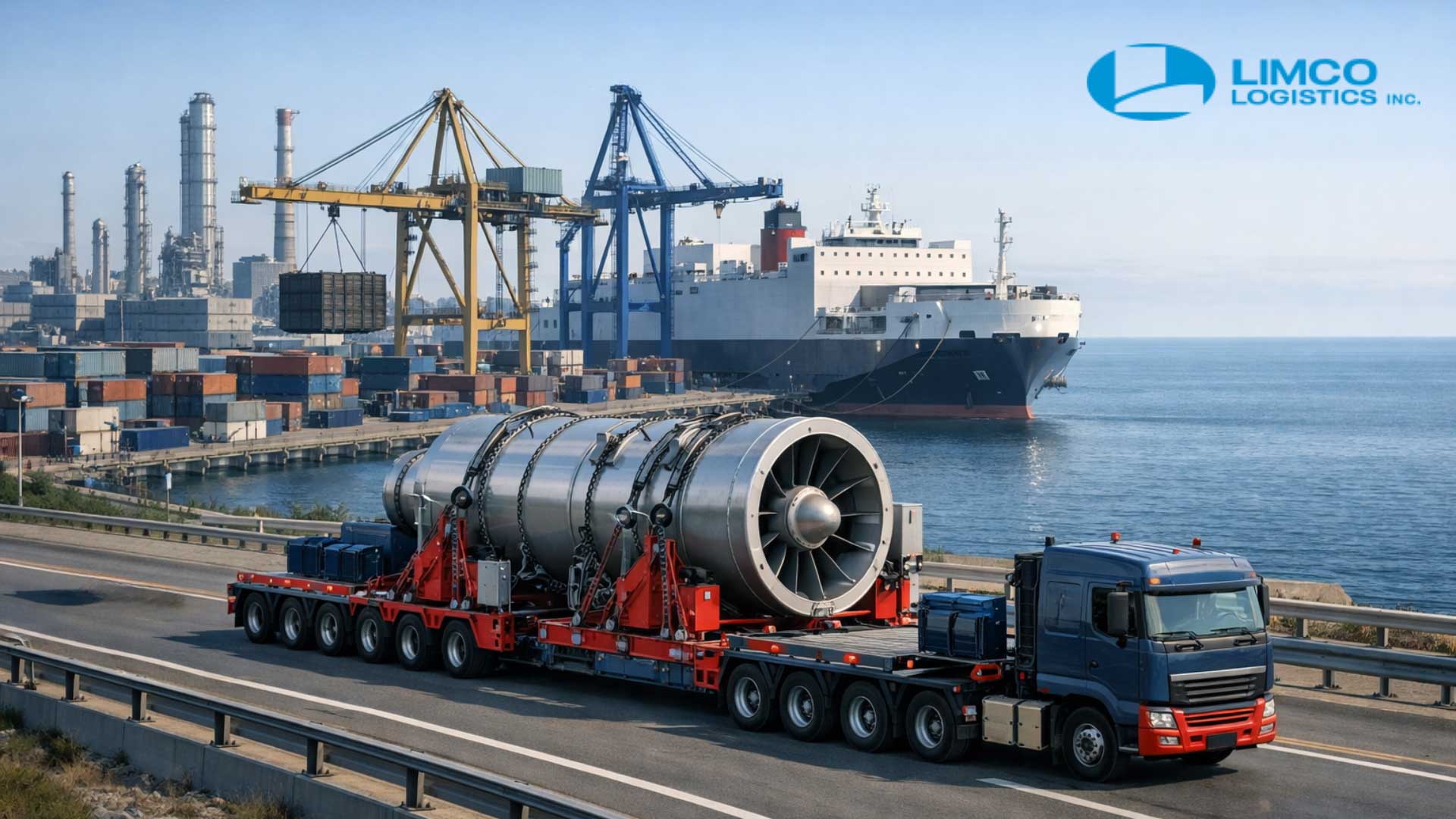
Heavy Equipment Shipping: Inland and Ocean Transport for Large Scale Enterprise Projects
When managing large scale enterprise logistics, transporting heavy equipment requires precision engineering and strict regulatory compliance. Heavy equipment shipping is the specialized process of moving oversized, overweight, or Out of Gauge (OOG) machinery from its origin facility to an international destination via coordinated inland trucking and ocean freight.
For project managers handling construction, mining, or industrial infrastructure, securing a seamless transition between the road network and the maritime terminal is critical to preventing costly delays.
For over 20 years, Limco Logistics Inc. has structured heavy equipment shipping solutions that integrate inland heavy haulage and ocean transport into a single engineered execution framework. From project cargo coordination to RoRo and breakbulk shipping, Limco delivers disciplined logistics for enterprise operations across global trade lanes.
What Is Heavy Equipment Shipping?
Heavy equipment shipping refers to the transport of oversized, overweight, and high value industrial machinery that exceeds standard container limits. This includes:
- Construction machinery
- Mining equipment
- Turbines and generators
- Industrial manufacturing lines
- Refinery and energy modules
- Large scale mechanical components
Unlike standard freight shipping, heavy machinery transport requires specialized handling, route engineering, port coordination, and marine lift planning.
Limco Logistics structures these movements through engineered inland transport planning, port handling coordination, and ocean freight execution aligned with enterprise level requirements.
Inland Heavy Equipment Transport: Engineering the First Mile
Route Surveys and Regulatory Compliance
Inland heavy equipment transport begins with route analysis and permit coordination. Oversized cargo requires:
- Bridge load assessments
- Height and axle weight calculations
- State and regional transport permits
- Escort vehicle coordination
- Infrastructure clearance verification
Limco Logistics integrates inland heavy haul planning with vessel schedules to eliminate delays between site pickup and port delivery.
Specialized Heavy Haul Equipment
Enterprise heavy equipment shipping often requires:
- Multi axle hydraulic trailers
- Lowbed and extendable trailers
- Specialized lifting gear
- On site loading coordination
By structuring inland operations under a unified project cargo model, Limco ensures that heavy machinery reaches port safely and on schedule.
Ocean Freight for Heavy Equipment Shipping
Breakbulk, RoRo, and Flat Rack Solutions
Ocean transport for heavy equipment shipping depends on cargo type and dimensions. Enterprises may require:
- Breakbulk vessel space
- RoRo shipping for self propelled machinery
- Flat rack container solutions
- Heavy lift crane coordination
- Engineered marine lashing
Limco Logistics leverages strong carrier partnerships and RoRo expertise to position heavy equipment on suitable vessels across North America, Africa, the Middle East, and Asia.
Synchronizing Inland and Ocean Execution
The success of heavy machinery transport depends on alignment between inland haulage and vessel booking. Limco coordinates:
- Port handling schedules
- Vessel cut off timing
- Cargo readiness confirmation
- Destination discharge planning
- Customs documentation preparation
This integrated inland and ocean transport model reduces dwell time, storage costs, and operational risk.
Project Cargo Management for Enterprise Operations
Heavy equipment shipping at enterprise scale requires structured project logistics management.
Centralized Execution Control
Limco Logistics provides:
- Dedicated project coordination teams
- Pre shipment inspection and documentation
- Risk assessment and mitigation planning
- Real time shipment monitoring
- Compliance management across jurisdictions
This approach ensures that inland heavy haulage and ocean freight operate under one accountable execution structure.
Risk Management and Asset Protection
Heavy machinery often represents significant capital investment. Limco embeds risk control measures into every movement including:
- Engineered securing and lashing plans
- Marine survey alignment
- Insurance coordination
- Contingency routing for weather or regulatory disruption
For enterprise clients, risk reduction translates directly into operational continuity.
Compliance and Documentation in Heavy Equipment Shipping
Large scale equipment shipping involves multiple regulatory layers including:
- Export documentation
- Customs clearance planning
- Port authority approvals
- Hazardous material classification where applicable
- Destination country import regulations
Limco Logistics integrates compliance into its heavy equipment shipping services to prevent documentation related delays that can disrupt enterprise project timelines.
Navigating Customs and Port Terminal Handling
Enterprise equipment shipping involves rigorous customs scrutiny. Exporting heavy machinery requires accurate Harmonized System (HS) code classification and detailed commercial invoices. Furthermore, the equipment must be completely cleaned of dirt or agricultural debris to pass strict international quarantine inspections before being allowed onto the vessel.
Why Enterprises Require Integrated Inland and Ocean Transport
Fragmented logistics providers increase exposure to delay, miscommunication, and accountability gaps.
Limco Logistics structures heavy equipment shipping as an integrated inland and ocean operation, combining:
- Heavy haul trucking
- Port operations coordination
- RoRo and breakbulk ocean freight
- Structured project cargo management
This unified model enhances predictability for industrial enterprises managing infrastructure, energy, manufacturing, and construction projects.
Global Heavy Equipment Shipping Across Major Trade Lanes
Heavy equipment shipping demand continues to grow across global industrial corridors.
Limco Logistics supports enterprise cargo movements across:
- North America to Africa
- United States to Middle East
- Transatlantic industrial routes
- Asia linked infrastructure corridors
With over 20 years of inland and ocean transport execution, Limco delivers structured heavy machinery shipping aligned with enterprise operational standards.
Partner with Limco Logistics for Enterprise Freight
Coordinating the moving parts of an international heavy haul project leaves no room for error. Limco Logistics operates as a premier international freight forwarder, specializing in end-to-end supply chain management for oversized and project cargo.
Frequently Asked Questions
1. What does Out of Gauge (OOG) cargo mean in international shipping?
Out of Gauge (OOG) cargo refers to heavy machinery or freight that exceeds the standard dimensions of a closed 20-foot or 40-foot shipping container. Because this oversized equipment cannot fit within standard container walls, it requires specialized transport methods such as Flat Rack containers or Breakbulk shipping.
2. What is the best ocean transport method for heavy machinery?
The optimal ocean transport method depends on the equipment's operational status and precise dimensions. Drivable, self-propelled machinery is best shipped via Roll-on/Roll-off (RoRo) vessels, while stationary oversized project cargo requires Flat Rack containers or specialized Breakbulk heavy-lift (LoLo) operations.
3. Why do heavy haul logistics require inland route surveys?
Heavy haul logistics require route surveys to ensure the inland transit path can safely accommodate the extreme weight and dimensions of oversized freight. Logistics engineers must physically assess bridge weight capacities, overhead clearance restrictions, and secure necessary municipal permits before mobilizing a heavy haul convoy.
4. Why must heavy equipment be cleaned before ocean export?
Heavy equipment must be meticulously cleaned before international shipping to pass strict agricultural quarantine inspections at the destination port. Any residual dirt, soil, mud, or plant matter left on the machinery will result in immediate rejection by customs authorities and severe border delays.
5. How do HS codes affect heavy equipment shipping?
Harmonized System (HS) codes legally dictate the specific import tariff rates and regulatory requirements for international heavy equipment transfers. Accurate HS code classification by a licensed customs broker is essential to prevent costly border delays and ensure precise duty payments for global enterprise projects.
Request a Structured Heavy Equipment Shipping Plan
Heavy equipment shipping for large scale enterprise projects demands engineered coordination, regulatory discipline, and synchronized inland and ocean transport.
If your organization is planning:
- Construction equipment export
- Industrial machinery relocation
- Energy or infrastructure cargo movement
- Cross border heavy machinery transport
Connect with our enterprise logistics team to design a controlled inland and ocean transport strategy aligned with your operational timelines.
