
Reefer Containers Explained: Cold Chain Shipping for Perishable Cargo
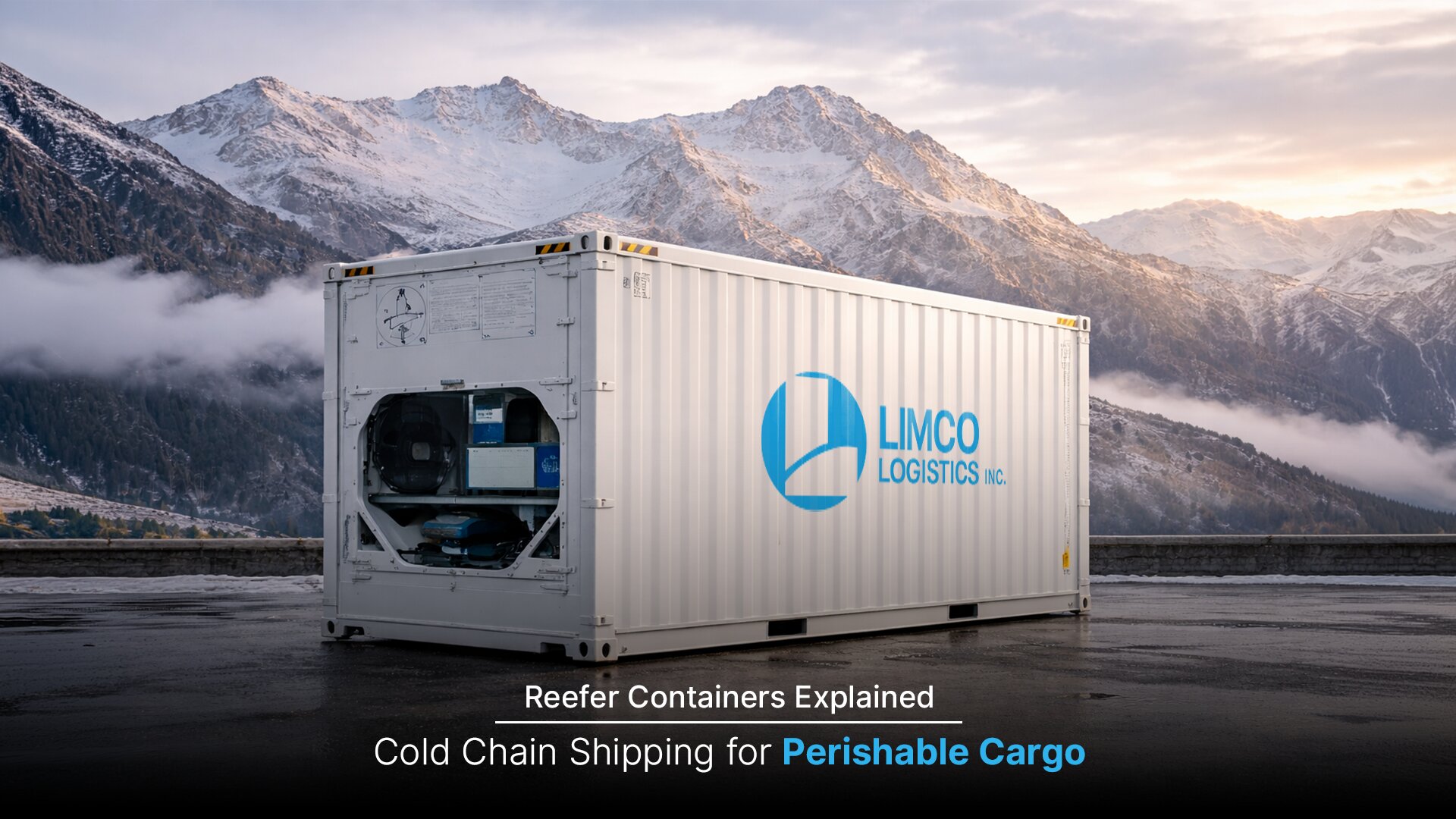
A reefer container is a refrigerated shipping container with an integrated cooling unit that maintains a defined temperature throughout an ocean voyage. It is the standard method for shipping temperature sensitive cargo including fresh produce, frozen goods, pharmaceuticals, and dairy products internationally. Cold chain logistics refers to the end to end process of keeping cargo within its required temperature band from the moment it leaves the origin facility to the moment it is delivered at destination. A break anywhere in that chain puts the cargo's quality, safety, and regulatory compliance at risk.
The global food supply depends on reefer containers. So does pharmaceutical distribution, the flower trade, and the movement of dairy products across continents. Without temperature-controlled ocean freight, the range of perishable goods available to consumers worldwide would be limited to what can be grown, processed, and distributed within a short geographic radius.
Reefer shipping is a technically specific discipline within international freight forwarding. It is not simply a matter of booking a container and setting a temperature. The cold chain requires precise pre-cooling, compatible packaging, correctly calibrated equipment, real-time monitoring during the voyage, and documentation that satisfies food safety and pharmaceutical regulatory requirements at the destination.
Limco Logistics has coordinated refrigerated freight movements for clients across the agricultural, food processing, and pharmaceutical sectors for over 20 years, managing shipments across more than 132 countries. This guide covers how reefer containers work, what cargo they carry, the key requirements for maintaining cold chain integrity, and what shippers need to address before booking a refrigerated shipment.
What Is a Reefer Container?
A reefer container is a purpose-built intermodal shipping container fitted with an integrated mechanical refrigeration unit. Unlike a standard dry container that simply encloses cargo, a reefer container actively controls the internal environment throughout the voyage, maintaining a defined temperature regardless of the ambient conditions outside.
The refrigeration system draws power from the vessel while at sea, connecting to the ship's electrical supply through standardized power points on deck. At ports and container yards, reefer containers connect to shore power to keep the cargo at temperature during loading, unloading, and storage between legs of the journey. The continuity of that power supply is one of the key operational requirements in cold chain logistics, because even a brief interruption can cause a temperature excursion that affects the entire load.
Reefer containers are available in standard sizes. The 20ft reefer is suited to smaller volumes of temperature-sensitive cargo and is widely used in ocean transport where shipment consolidation or limited vessel space is a factor. The 40ft High Cube reefer is the most common size for high-volume commercial perishable trade, offering greater internal volume while maintaining the same footprint. Limco Logistics also works with 10ft reefer units for specialized or smaller shipment requirements through its refrigerated freight services.
The standard operating temperature range for reefer containers spans from approximately -30°C to +25°C, covering the full spectrum from deep frozen cargo to chilled ambient-sensitive goods. Specialist ultra-low temperature units extend that range further for specific pharmaceutical and seafood applications.
How Reefer Containers Maintain Temperature
Understanding how a reefer container maintains its internal environment is useful for any shipper preparing temperature-sensitive cargo for an ocean voyage. The system involves four coordinated components working continuously from loading through delivery.
Integrated refrigeration unit
The refrigeration unit is mounted on the front wall of the container and operates as a self-contained mechanical system. It draws power from the vessel or shore connection, runs the compressor and condenser cycle, and maintains the set temperature by cooling the air circulating inside the container. The unit is set to a specific target temperature before loading, and the system works continuously to hold that temperature within tight tolerances throughout the voyage.
Forced air circulation
Reefer containers use a T-shaped floor profile, sometimes called a T-bar floor, that creates channels beneath the cargo. Cold air is forced upward from the bottom of the container, circulates through and around the cargo stack, and returns to the refrigeration unit through the top. This constant airflow prevents temperature stratification inside the container, where cargo near the walls or ceiling could sit at a different temperature from cargo at the center. Blocking the floor channels during loading breaks the airflow design and creates cold spots and warm spots within the load.
Digital temperature monitoring and data logging
Modern reefer containers are equipped with sensors that record the internal temperature at regular intervals throughout the voyage. This data is stored onboard and can be downloaded at the destination. For pharmaceutical shipments, food safety compliance requirements, and any cargo moving under chain-of-custody documentation, this temperature log is a required part of the shipment record. It provides an auditable trail demonstrating that the cargo remained within its required temperature band from origin to destination. Limco Logistics coordinates the retrieval and documentation of temperature data as part of the cold chain management service.
Controlled atmosphere capability
Some reefer containers go beyond temperature control to also manage the gas composition inside the unit. Controlled atmosphere (CA) technology adjusts oxygen, nitrogen, and carbon dioxide levels to slow the natural respiration process of fresh produce. By reducing oxygen concentration and elevating carbon dioxide, the ripening and deterioration rate of fresh fruit is significantly slowed, extending the effective shelf life of the cargo. CA technology is widely used for long-haul shipments of bananas, avocados, berries, and stone fruits that would otherwise deteriorate before arriving at distant markets.
What Cargo Requires a Reefer Container?
Temperature-sensitive cargo spans a wider range of industries than most shippers assume. The categories below represent the primary cargo types that require reefer containers for international ocean freight. Each has distinct temperature requirements that must be confirmed and documented before the container is booked.
| Cargo Category | Temperature Requirement | Key Consideration |
|---|---|---|
| Fresh fruits and vegetables | Chilled, typically 0°C to 13°C depending on the commodity | Different produce requires different settings. Citrus fruits tolerate slightly warmer settings than leafy greens. Confirm per commodity temperature before booking. |
| Frozen meat and poultry | Frozen, at or below -18°C | Must remain solidly frozen throughout. Any thawing and refreezing compromises quality and creates food safety risk. |
| Fresh and frozen seafood | Fresh: 0°C to 4°C. Frozen: -18°C or below. Ultra low for specialty species. | High value seafood such as tuna and swordfish may require ultra low temperature units below -40°C. |
| Dairy products | Chilled, 0°C to 4°C | Milk, cheese, butter, and cream require consistent chilled conditions throughout. Temperature spikes accelerate spoilage. |
| Pharmaceuticals and vaccines | 2°C to 8°C for most biologics. Ultra low for some advanced therapeutics. | Regulatory compliance documentation is mandatory. Temperature logs must satisfy FDA, WHO, or destination authority requirements. |
| Fresh cut flowers | Chilled, typically -1°C to 4°C | Flowers are highly sensitive to temperature and ethylene gas. Compatible cargo stowage is important. |
| Chocolate and confectionery | Controlled ambient, typically 12°C to 18°C | Chocolate does not need freezing but requires protection from heat and humidity that causes bloom and texture degradation. |
| Certain chemicals | Ambient controlled, varies by product | Some chemical compounds require temperature stability to prevent degradation, crystallization, or separation. |
For companies operating in the agricultural sector, the specific temperature and ventilation requirements for each crop are a critical input into the reefer booking process. Limco Logistics works with agricultural exporters and importers to match the correct reefer specification to the commodity being shipped. The agricultural freight services page covers the range of sectors Limco serves, including fresh produce, perishable food products, and agribusiness cargo through its agricultural industry logistics services.
Why Pre-Cooling Is the Most Critical Step in Cold Chain Preparation
The single most common cause of cold chain failure is not equipment malfunction. It is loading cargo into a reefer container at the wrong temperature.
A reefer container is engineered to maintain temperature. It is not designed to reduce the temperature of warm cargo. The refrigeration unit works by cycling conditioned air around cargo that is already at or near the required carriage temperature. When ambient-temperature goods are loaded into a pre-cooled container, the thermal mass of the warm cargo overwhelms the refrigeration system's capacity to compensate. The internal temperature rises, and if the cargo is food or pharmaceuticals, that excursion may be enough to begin spoilage or compromise product efficacy, even if the refrigeration unit is functioning perfectly.
Correct cold chain pre-cooling involves two parallel steps that must both be completed before loading begins.
Pre-cool the cargo
All cargo must be brought to its required carriage temperature at the origin cold store or processing facility before it is moved to the container. Produce should come from a pre-cooled packing house. Frozen goods must be fully frozen. Pharmaceuticals must be at their required 2°C to 8°C band before they leave the temperature-controlled warehouse. The loading operation itself is a window of vulnerability because cargo is briefly exposed to ambient conditions during the transfer from cold store to container. That window must be minimized by keeping doors closed, working quickly, and staging cargo as close to the container as possible.
Pre-cool the container
The reefer container must reach the required set temperature before cargo is loaded into it. Transferring cold cargo into a container that is still at ambient temperature causes surface condensation, potential frost formation, and a thermal shock that stresses the cargo. The container should be connected to power and running at the set temperature for a sufficient time before loading, with the internal walls, floor, and ceiling all down to temperature. The freight forwarder confirms the pre-cooling protocol with the container operator as part of the booking process.
Temperature Monitoring and Documentation During the Voyage
Cold chain integrity during an ocean voyage depends on both the physical performance of the refrigeration equipment and the data systems that record its behavior throughout the journey. For industries where regulatory compliance and product liability are real operational concerns, the monitoring record is as important as the cargo itself.
Onboard data logging
The temperature sensors built into modern reefer containers record internal temperature at regular intervals, typically every hour or more frequently for sensitive cargo. This log captures the complete thermal history of the container from the moment loading begins through discharge at the destination port. Any temperature excursion, whether caused by a power interruption, equipment malfunction, or a door being left open during an intermediate port call, is captured in the record with its time, duration, and magnitude.
Remote monitoring
Many major ocean carriers now offer real-time remote monitoring services for reefer containers. Data from onboard sensors is transmitted to a monitoring platform, allowing the shipper or freight forwarder to review the container's status during the voyage. If a temperature deviation is detected, an alert is generated so that intervention can be arranged at the next port of call if necessary. This level of visibility substantially reduces the risk of arriving at destination with a compromised load and no prior warning.
Regulatory documentation
For pharmaceutical shipments moving under Good Distribution Practice (GDP) requirements, and for food products subject to HACCP or FDA import regulations, the temperature log is a required compliance document. It must demonstrate that the cargo remained within the defined temperature band throughout the transportation event. Gaps in the record, unexplained excursions, or equipment that was not certified and calibrated before the voyage creates compliance risk that can result in the cargo being detained, rejected, or destroyed at the destination port.
Limco Logistics coordinates the documentation chain for regulatory shipments, ensuring that temperature records, equipment calibration certificates, and compliance declarations are prepared and available to support import clearance at the destination. Understanding how these requirements interact with the broader documentation chain for any ocean shipment is covered in Limco's Bill of Lading terms reference, which outlines the carrier's responsibilities and liability framework for all ocean freight, including reefer movements.
Common Cold Chain Challenges and How They Are Managed
Cold chain logistics involves a longer list of failure points than standard dry freight. Every transition between facilities, transport modes, and handlers creates a window where the temperature integrity of the cargo can be compromised. Understanding the most common challenges allows shippers to build the right precautions into the operational plan before the cargo moves.
Power interruptions at ports
Reefer containers require continuous power. Port delays, terminal congestion, and handling schedules sometimes result in containers sitting disconnected from power for periods that exceed safe limits for the cargo. At well-equipped terminals, reefer plug points are available throughout the yard. At smaller or less-developed ports, backup generator sets can be attached to individual containers to maintain power during disconnected periods. The freight forwarder confirms port power availability for each leg of the journey during the booking process, particularly for destinations where terminal infrastructure is variable.
Incompatible cargo stowage
Some temperature-sensitive cargo produces ethylene gas as it ripens. Ethylene accelerates the ripening and deterioration of other produce stored nearby. Flowers are highly sensitive to ethylene and must not be stowed with ethylene-producing fruits such as bananas or apples. The freight forwarder advises on compatible and incompatible cargo combinations, particularly for LCL refrigerated shipments where multiple commodity types may be grouped in the same container. For high-value or sensitive cargo, a dedicated FCL booking eliminates this risk entirely.
Improper loading and stowage
Cargo stacked too tightly or loaded against the container walls can block the airflow channels that maintain temperature uniformity inside the reefer. Cartons must be loaded in a pattern that allows cold air to circulate freely through the stack. The T-bar floor channels must remain clear. Cargo that protrudes into the airflow path near the refrigeration unit intake creates dead zones where temperature cannot be maintained. Loading instructions from the freight forwarder specify the correct stowage pattern for each commodity and container size.
Transit delays and vessel schedule changes
A voyage that runs longer than planned due to port congestion, weather routing changes, or vessel schedule adjustments can strain the cold chain if the cargo is near the end of its shelf life at the time of loading. Planning shipments with an adequate buffer between the cargo's expected condition at loading and the maximum transit time for the route is a basic cold chain risk management principle. For fresh produce with short shelf lives, the sailing frequency and direct versus transhipment routing options on the lane are significant factors in the booking decision. This is why understanding how the global shipping network operates matters for perishable exporters, and Limco's guide on how cargo moves across international trade networks provides useful context for shippers planning time-sensitive movements.
Shipping Temperature Sensitive Cargo Internationally?
Limco Logistics coordinates reefer container bookings, cold chain documentation, and end to end refrigerated freight management across more than 132 countries. Speak with our team about your specific cargo and destination.
Request a Refrigerated Freight QuoteReefer Container vs Standard Dry Container: Choosing the Right Equipment
Not every cargo that benefits from temperature protection requires a full reefer container. And not every shipper familiar with standard ocean freight immediately recognizes when the shift to refrigerated equipment is necessary. The decision between a reefer and a dry container comes down to what the cargo requires, not what the shipper finds convenient.
A standard dry container provides no active temperature control. It offers protection from rain, moisture ingress, and basic environmental exposure, but the internal temperature of a dry container will follow ambient conditions closely. In a vessel's cargo hold during a tropical crossing, internal temperatures can reach 40°C or higher. Any cargo that cannot tolerate that level of heat without damage to quality, safety, or marketability requires a reefer container, not a dry one.
The categories where shippers sometimes underestimate the need for refrigerated equipment include chocolate and confectionery moving to tropical destinations, certain nutraceuticals and health products with temperature stability requirements, wine and spirits destined for markets with high ambient temperatures during transit, and fresh-cut flowers for any market beyond very short regional routes.
If there is any doubt about whether your cargo requires a reefer container, the correct approach is to consult the product's storage and transport specification documentation and raise the question with your freight forwarder before booking. Booking a dry container and discovering during transit that the cargo required temperature control is a problem that cannot be corrected once the vessel has sailed.
For shippers comparing container options more broadly, the guide on LCL vs FCL ocean freight covers the foundational decision between shared and dedicated container bookings, which applies to refrigerated cargo as it does to standard dry freight.
How Limco Logistics Coordinates Refrigerated Freight Shipments
Shipping perishable cargo internationally involves a coordination layer that standard dry freight does not require. The freight forwarder's role extends beyond booking the vessel space and preparing the documentation. For reefer shipments, it includes confirming equipment specifications, verifying power availability at each port, coordinating pre-cooling protocols with the origin facility, monitoring the voyage, and ensuring that the temperature record is available to support destination customs and regulatory clearance.
Limco Logistics manages refrigerated freight movements as end-to-end coordinated operations. The process begins with the cargo specification: what the product is, what temperature it requires, what regulatory or compliance documentation the destination market demands, and what the maximum acceptable transit time is for that product at that condition. These inputs determine the container specification, the routing choice, the carrier selection, and the documentation package.
For agricultural exporters shipping fresh produce, the booking timeline is driven by harvest schedules and vessel cut-off dates. Limco coordinates these time-critical bookings across its carrier network to align vessel departures with the cargo's readiness at origin. For pharmaceutical clients, the compliance documentation requirements, including GDP temperature records and carrier certification, are managed as part of the standard service, not as an add-on.
Limco Logistics serves perishable cargo clients across a range of industry sectors. For food and agricultural exporters, the services extend from the farm gate to the destination market through Limco's coordinated cold chain logistics offering. The full range of industry-specific freight services Limco provides, including temperature-sensitive agricultural cargo, is detailed across the relevant industry pages on the Limco website.
Incoterms and Responsibility for Cold Chain Integrity
When shipping perishable cargo internationally, the Incoterm agreed between buyer and seller determines which party controls the cold chain at each stage and who bears the financial risk if a temperature excursion damages the cargo.
Under FOB (Free on Board) terms, the seller delivers the cargo on board the vessel at the origin port. From that point, the buyer is responsible for freight, insurance, and any cold chain failures during the ocean leg. Under CIF (Cost, Insurance, and Freight), the seller arranges and pays for ocean freight and insurance to the destination port. The party that controls the freight booking also controls the selection of the carrier, the container equipment, and the monitoring service, which means the cold chain risk during transit sits with whoever books the freight.
For perishable cargo where product liability or regulatory compliance is a real concern, the Incoterm choice is not simply a cost allocation decision. It is a decision about who manages the cold chain. A seller who understands their product's temperature requirements may prefer to control the freight booking under CIF or CIP terms rather than handing that responsibility to a buyer who may prioritize cost over cold chain rigor. Limco's Incoterms reference guide provides a structured breakdown of each term and the responsibilities it creates, which is a practical starting point for exporters structuring perishable cargo sale contracts.
Frequently Asked Questions
What is a reefer container?
A reefer container is a refrigerated shipping container equipped with an integrated cooling unit that maintains precise temperature control throughout an ocean voyage. Reefer containers are used to transport perishable and temperature-sensitive cargo including fresh produce, frozen goods, dairy products, meat, seafood, pharmaceuticals, and flowers. They are available in standard sizes of 10ft, 20ft, and 40ft and can maintain temperatures across a broad range from below freezing to above ambient, depending on the cargo requirement.
What is the difference between chilled and frozen reefer shipping?
Chilled reefer shipping maintains temperatures above freezing, typically in the 0°C to 15°C range depending on the cargo. It is used for fresh produce, dairy, pharmaceuticals, and flowers that must remain cold but not frozen. Frozen reefer shipping maintains temperatures at or below -18°C and is used for frozen meat, seafood, and ice cream that must remain solidly frozen throughout the voyage. The required temperature setting is determined by the commodity and must be documented and communicated to the freight forwarder before booking.
Why is pre-cooling important in cold chain logistics?
Pre-cooling is critical because a reefer container is designed to maintain the temperature of cargo that is already at the correct temperature, not to cool warm products down. Loading ambient-temperature cargo into a pre-cooled container creates a thermal imbalance that risks temperature excursions and can compromise the entire load. Both the container and the cargo must be at the required carriage temperature before loading begins.
What cargo can be shipped in a reefer container?
Reefer containers carry fresh fruits and vegetables, frozen meat and seafood, dairy products, pharmaceuticals and vaccines, fresh-cut flowers, chocolate, certain chemicals requiring ambient temperature control, and sensitive electronic components. The common requirement across all these categories is that the cargo's value, safety, or regulatory compliance depends on maintaining a defined temperature band from origin to destination.
How does cold chain monitoring work during an ocean voyage?
Modern reefer containers are equipped with digital sensors and data loggers that continuously record internal temperature and humidity throughout the voyage. This data generates a complete record of the cargo's thermal environment from loading to discharge, which can be downloaded at destination to verify compliance with the required temperature band and to support regulatory submissions or quality assurance processes.
What is controlled atmosphere shipping and when is it used?
Controlled atmosphere shipping goes beyond temperature control by also managing the gas composition inside the container, specifically oxygen, carbon dioxide, and nitrogen levels. By reducing oxygen and increasing carbon dioxide concentrations, it slows the respiration rate of fresh produce and significantly extends shelf life. It is used for long-haul shipments of bananas, avocados, berries, and other fresh fruit that would deteriorate before reaching destination under standard chilled conditions alone.
What Every Shipper of Perishable Cargo Needs to Know Before Booking
Cold chain logistics is unforgiving. Unlike a delayed dry cargo shipment where the goods simply arrive late, a cold chain failure can result in the entire load being destroyed, a regulatory hold at the destination port, product liability exposure, and the loss of a commercial relationship with a buyer who expected product to arrive in specification.
The precautions that protect against cold chain failure are not complex, but they require discipline at every stage. The cargo must be at temperature before it is loaded. The container must be pre-cooled and calibrated. The documentation must be complete before the vessel departs. The power supply must be confirmed at every port. And the monitoring record must be available to support clearance at destination.
Limco Logistics coordinates all of these elements as part of its refrigerated freight service. The team reviews cargo specifications, confirms equipment and routing suitability, manages the documentation package for the destination market's regulatory requirements, and provides tracking throughout the voyage. For perishable cargo shippers who cannot afford a cold chain failure, working with an experienced freight forwarder that treats cold chain management as a technical discipline rather than a commodity booking is the difference between cargo that arrives in condition and cargo that does not.
Ready to Ship Your Perishable Cargo Internationally?
Limco Logistics provides end to end refrigerated freight solutions for fresh produce, frozen goods, pharmaceuticals, and specialty perishable cargo across more than 132 countries. Share your cargo details and destination with our team for a tailored cold chain logistics plan.
Get a Refrigerated Freight Quote