
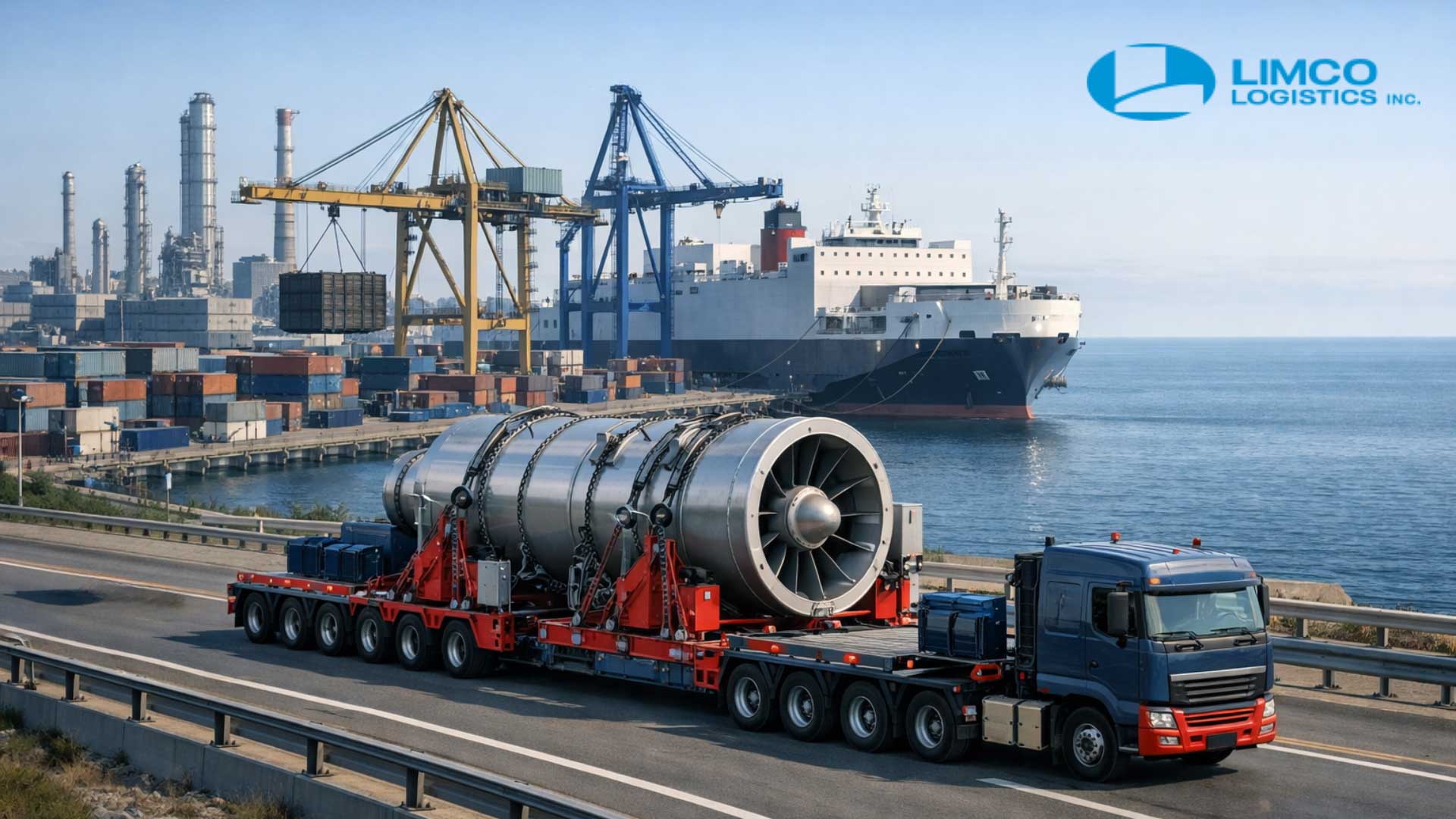
Heavy equipment shipping is not a standard freight booking. For large scale enterprise projects, it is a controlled logistics operation that directly impacts construction timelines, energy commissioning schedules, and industrial production continuity.
Industrial scale cargo requires industrial grade logistics.
For over 20 years, Limco Logistics Inc. has structured heavy equipment shipping solutions that integrate inland heavy haulage and ocean transport into a single engineered execution framework. From project cargo coordination to RoRo and breakbulk shipping, Limco delivers disciplined logistics for enterprise operations across global trade lanes.
What Is Heavy Equipment Shipping?
Heavy equipment shipping refers to the transport of oversized, overweight, and high value industrial machinery that exceeds standard container limits. This includes:
- Construction machinery
- Mining equipment
- Turbines and generators
- Industrial manufacturing lines
- Refinery and energy modules
- Large scale mechanical components
Unlike standard freight shipping, heavy machinery transport requires specialized handling, route engineering, port coordination, and marine lift planning.
Limco Logistics structures these movements through engineered inland transport planning, port handling coordination, and ocean freight execution aligned with enterprise level requirements.
Inland Heavy Equipment Transport: Engineering the First Mile
Route Surveys and Regulatory Compliance
Inland heavy equipment transport begins with route analysis and permit coordination. Oversized cargo requires:
- Bridge load assessments
- Height and axle weight calculations
- State and regional transport permits
- Escort vehicle coordination
- Infrastructure clearance verification
Limco Logistics integrates inland heavy haul planning with vessel schedules to eliminate delays between site pickup and port delivery.
Specialized Heavy Haul Equipment
Enterprise heavy equipment shipping often requires:
- Multi axle hydraulic trailers
- Lowbed and extendable trailers
- Specialized lifting gear
- On site loading coordination
By structuring inland operations under a unified project cargo model, Limco ensures that heavy machinery reaches port safely and on schedule.
Ocean Freight for Heavy Equipment Shipping
Breakbulk, RoRo, and Flat Rack Solutions
Ocean transport for heavy equipment shipping depends on cargo type and dimensions. Enterprises may require:
- Breakbulk vessel space
- RoRo shipping for self propelled machinery
- Flat rack container solutions
- Heavy lift crane coordination
- Engineered marine lashing
Limco Logistics leverages strong carrier partnerships and RoRo expertise to position heavy equipment on suitable vessels across North America, Africa, the Middle East, and Asia.
Synchronizing Inland and Ocean Execution
The success of heavy machinery transport depends on alignment between inland haulage and vessel booking. Limco coordinates:
- Port handling schedules
- Vessel cut off timing
- Cargo readiness confirmation
- Destination discharge planning
- Customs documentation preparation
This integrated inland and ocean transport model reduces dwell time, storage costs, and operational risk.
Project Cargo Management for Enterprise Operations
Heavy equipment shipping at enterprise scale requires structured project logistics management.
Centralized Execution Control
Limco Logistics provides:
- Dedicated project coordination teams
- Pre shipment inspection and documentation
- Risk assessment and mitigation planning
- Real time shipment monitoring
- Compliance management across jurisdictions
This approach ensures that inland heavy haulage and ocean freight operate under one accountable execution structure.
Risk Management and Asset Protection
Heavy machinery often represents significant capital investment. Limco embeds risk control measures into every movement including:
- Engineered securing and lashing plans
- Marine survey alignment
- Insurance coordination
- Contingency routing for weather or regulatory disruption
For enterprise clients, risk reduction translates directly into operational continuity.
Compliance and Documentation in Heavy Equipment Shipping
Large scale equipment shipping involves multiple regulatory layers including:
- Export documentation
- Customs clearance planning
- Port authority approvals
- Hazardous material classification where applicable
- Destination country import regulations
Limco Logistics integrates compliance into its heavy equipment shipping services to prevent documentation related delays that can disrupt enterprise project timelines.
Why Enterprises Require Integrated Inland and Ocean Transport
Fragmented logistics providers increase exposure to delay, miscommunication, and accountability gaps.
Limco Logistics structures heavy equipment shipping as an integrated inland and ocean operation, combining:
- Heavy haul trucking
- Port operations coordination
- RoRo and breakbulk ocean freight
- Structured project cargo management
This unified model enhances predictability for industrial enterprises managing infrastructure, energy, manufacturing, and construction projects.
Global Heavy Equipment Shipping Across Major Trade Lanes
Heavy equipment shipping demand continues to grow across global industrial corridors.
Limco Logistics supports enterprise cargo movements across:
- North America to Africa
- United States to Middle East
- Transatlantic industrial routes
- Asia linked infrastructure corridors
With over 20 years of inland and ocean transport execution, Limco delivers structured heavy machinery shipping aligned with enterprise operational standards.
Request a Structured Heavy Equipment Shipping Plan
Heavy equipment shipping for large scale enterprise projects demands engineered coordination, regulatory discipline, and synchronized inland and ocean transport.
If your organization is planning:
- Construction equipment export
- Industrial machinery relocation
- Energy or infrastructure cargo movement
- Cross border heavy machinery transport
Connect with our enterprise logistics team to design a controlled inland and ocean transport strategy aligned with your operational timelines.
