
Heavy Equipment Export Planning
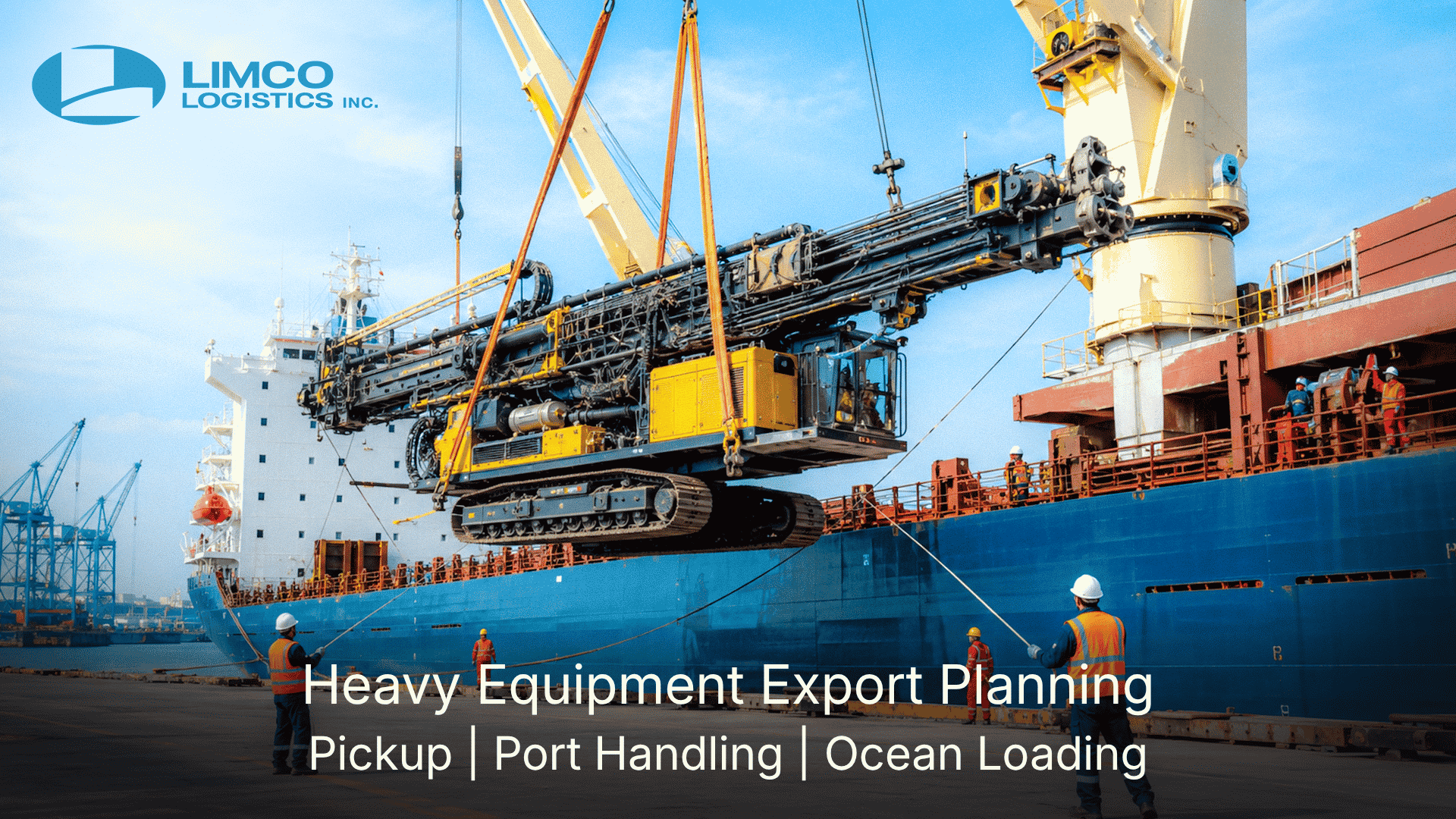
Heavy equipment export planning fails when the shipment is treated as a simple ocean booking.
A machine may be ready to move, but that does not mean the shipment is operationally ready. Before it reaches the vessel, several control points must work together: inland pickup, cargo measurement, documentation, port receiving, terminal handling, ocean loading, tracking, and destination readiness.
For construction machinery, agricultural equipment, vehicles, generators, industrial units, and project cargo, the real risk is not just vessel availability. The real risk is poor coordination between each stage of movement.
That is why heavy equipment exports need a structured freight plan before the truck arrives.
Limco Logistics supports this type of movement through ocean freight, RoRo freight, road, rail, air, construction machinery logistics, real time tracking, and customized freight solutions. For heavy cargo, that matters because the shipment is not controlled by one rate. It is controlled by how well each stage is planned and executed.
What Heavy Equipment Export Planning Really Means
Heavy equipment export planning is the process of preparing oversized, overweight, self propelled, wheeled, tracked, or non standard cargo for international movement.
It includes:
- Cargo measurement
- Weight confirmation
- Pickup planning
- Export documentation
- Mode selection
- Port receiving coordination
- Terminal handling
- Ocean booking
- Tracking visibility
- Destination readiness
A bulldozer, excavator, tractor, crane, generator, or industrial machine cannot be planned only by commodity name. It must be planned by actual dimensions, weight, condition, attachments, mobility, lifting points, and destination handling capability.
This is where Limco’s construction machinery logistics capability becomes important. Heavy equipment shipping requires a freight partner that can evaluate whether the cargo should move by RoRo, flat rack, containerized shipping, or specialized handling.
Why Heavy Equipment Shipments Lose Control Early
Most heavy equipment export problems begin before the cargo reaches the port.
A shipment can lose control when:
- The cargo is booked using estimated dimensions
- The wrong ocean method is selected
- The inland truck is not suited to the machine
- The pickup site is not ready for loading
- The port does not accept the cargo as presented
- Documentation does not match the cargo
- The cargo misses the terminal cutoff
- The machine is not prepared for loading
- Destination handling is not arranged in advance
For enterprise shippers, machinery dealers, construction companies, project cargo teams, and exporters, the goal is not just to secure space. The goal is to create a shipment plan that holds from pickup to vessel loading.
Limco’s strength fits this exact requirement because its service model connects multimodal transportation, RoRo freight, ocean freight, cargo handling, documentation support, and shipment visibility within one coordinated freight structure.
Heavy Equipment Export Control Framework
| Planning Stage | What Must Be Controlled | Why It Matters |
|---|---|---|
| Cargo validation | Actual dimensions, weight, condition, attachments, and mobility | Prevents wrong mode selection and booking changes |
| Inland pickup | Truck type, route access, pickup timing, loading space, and permits | Prevents delays before the cargo reaches port |
| Documentation | Cargo description, shipper details, consignee details, value, and export documents | Reduces customs, carrier, and terminal delays |
| Port handling | Receiving rules, cutoffs, staging, keys, equipment condition, and terminal instructions | Prevents rejection, storage, and missed sailings |
| Ocean loading | RoRo, flat rack, containerized shipping, or specialized handling | Ensures the cargo moves using the right vessel method |
| Shipment visibility | Pickup status, port receipt, loading confirmation, departure, transit, and arrival updates | Gives shippers control after the cargo enters the freight chain |
This is the difference between a freight quote and a freight execution plan. A quote shows cost. A plan controls movement.
Step 1: Validate the Cargo Before Quoting
The first mistake in heavy equipment export shipping is quoting from incomplete cargo details.
Before a shipment is priced or booked, shippers should confirm:
- Make and model
- Actual length, width, and height
- Actual weight
- Operating condition
- Photos from all sides
- Attachment details
- Wheel or track configuration
- Pickup location
- Destination port or delivery point
- Loading and unloading requirements
This step is especially important when the cargo may qualify for more than one shipping method. A running excavator may appear suitable for RoRo, but height, width, port rules, or destination limitations may change the plan.
Limco’s role is valuable here because the cargo can be evaluated against practical shipping options before the booking is finalized. That helps avoid last minute revisions, missed cutoffs, and avoidable handling costs.
Step 2: Match Inland Pickup With Port Readiness
The inland leg is often where the first execution gap appears.
A heavy equipment shipment may require specialized trucking, loading equipment, permits, route review, escorts, or site coordination. If the inland move is not planned correctly, the cargo may never reach the port within the required receiving window.
- Before pickup, the shipper should confirm:
- Can the machine start, steer, brake, and move safely?
- Is there enough space for loading?
- Is the pickup surface suitable for heavy equipment?
- Are attachments secured or removed?
- Are there height or weight restrictions on the route?
- Is the pickup date aligned with the port cutoff?
- Can the truck access the pickup site without delays?
Limco’s broader freight services are useful here because heavy equipment exports often involve more than ocean freight. Road transport, port coordination, ocean movement, and destination planning must work as one sequence.
Step 3: Select the Right Ocean Shipping Method
Heavy equipment is usually moved through RoRo, flat rack, containerized shipping, or specialized cargo handling.
RoRo is often suitable for wheeled, self propelled, and approved rolling cargo. Limco’s RoRo freight service is directly relevant for vehicles, heavy machinery, and project cargo that can be rolled onto the vessel.
Flat rack shipping may be suitable when cargo cannot fit inside a standard container but can be secured on a platform.
Containerized shipping may work when the machine or equipment can fit inside a standard or high cube container after proper preparation.
Specialized handling may be required when the cargo is too large, too heavy, or too complex for standard container or RoRo movement.
The right method should be selected based on cargo reality, not preference. Dimensions, operating condition, port capability, carrier acceptance, and destination handling must all be reviewed.
For shippers comparing methods, Limco’s blog on RoRo vs Flat Rack vs Breakbulk can support the early decision process.
Step 4: Define the Service Flow Early
Heavy equipment exports should have a clear service flow before pickup begins.
The movement may be:
- Door to port
- Port to port
- Port to door
- Door to door
This decision changes the level of responsibility, coordination, and cost control required.
A port to port move may look simple, but the shipper still needs to manage inland pickup and destination arrangements. A door to port move gives better control over the origin leg. A port to door or door to door move requires stronger destination planning.
For heavy equipment, this should be clarified before the rate is accepted. Otherwise, the shipper may receive a price that only covers part of the actual operational need.
Step 5: Prepare the Machine for Export
A machine that is ready for use is not always ready for export.
Preparation may include:
- Cleaning the equipment
- Removing dirt, soil, or debris
- Securing loose parts
- Removing or folding attachments
- Checking battery and fluid requirements
- Confirming fuel level requirements
- Protecting vulnerable components
- Preparing keys and operating instructions
- Taking photos before pickup
This stage matters because carrier and port acceptance can depend on cargo condition. If the machine arrives unprepared, it may face extra handling, delays, or rejection.
For high value machinery, condition photos also help protect the shipper by documenting the cargo before inland movement, port handling, and vessel loading.
Step 6: Align Documentation With the Cargo
Heavy equipment documentation must match the physical shipment.
If the cargo description, value, consignee details, machine identification, or bill of lading instructions do not match the actual cargo, delays can occur at customs, port, or carrier level.
Key documentation areas include:
- Exporter details
- Consignee details
- Cargo description
- Machine identification
- Declared value
- Port of loading
- Port of discharge
- Final destination
- Bill of lading instructions
- Insurance requirements
Limco’s freight forwarding role becomes important because documentation cannot be separated from the cargo plan. RoRo cargo, flat rack cargo, containerized machinery, and specialized equipment each require different handling details and carrier instructions.
Step 7: Control Port Handling Before Arrival
Port handling should be planned before the cargo reaches the terminal.
The shipment team should confirm:
- Which terminal will receive the cargo
- What the receiving window is
- Whether an appointment is required
- Whether the machine must be operational
- Whether keys must accompany the unit
- Where the cargo will be staged
- How the cargo will be loaded
- What happens if the cargo misses cutoff
- The port is not the right place to discover missing details.
Limco’s ocean freight capability is relevant because heavy equipment requires more than booking space. It requires terminal readiness, cargo acceptance, loading coordination, and visibility after departure.
Step 8: Keep Visibility After the Cargo Moves
For heavy equipment exporters, visibility should not stop after pickup.
Decision makers need to know:
- Has the cargo been picked up?
- Has it reached the port?
- Has the terminal received it?
- Has it been loaded?
- Has the vessel departed?
- Is there any transshipment?
- What is the expected arrival timeline?
- What happens at destination?
Limco’s real time tracking capability supports this level of control. For high value machinery, tracking is not just convenience. It helps buyers, exporters, project teams, and finance teams plan around real shipment status instead of scattered updates.
Heavy Equipment Export Checklist
Before confirming a heavy equipment export booking, shippers should verify:
- Actual dimensions and weight are confirmed
- Machine condition is documented
- Photos are collected
- Operating status is confirmed
- Pickup site access is checked
- Inland truck type is matched to the cargo
- Port receiving rules are reviewed
- Shipping method is selected correctly
- Service flow is confirmed
- Export documents match the cargo
- Insurance needs are reviewed
- Destination handling is planned
- Tracking expectations are clear
A shipment that passes this checklist is far less likely to face preventable delays or cost surprises.
Common Mistakes to Avoid
Booking before measuring the machine
Model specifications are not always enough. Attachments, tires, tracks, modifications, or extra parts can change the cargo profile.
Assuming RoRo is always the easiest option
RoRo can be efficient, but not every machine qualifies. Operating condition, port rules, carrier acceptance, and destination capability all matter.
Ignoring the inland leg
The vessel may be available, but the cargo still needs to reach the port on time and in the right condition.
Treating port delivery as a simple drop off
Heavy equipment may need specific receiving instructions, keys, staging rules, and handling preparation.
Reviewing documents too late
Documentation errors found at the port are harder and more expensive to correct than issues found before pickup.
How Limco Logistics Supports Heavy Equipment Export Planning
Limco Logistics is positioned for shipments where freight execution requires more than a standard booking.
For heavy equipment exports, the movement may require:
- Construction machinery logistics
- RoRo freight
- Ocean freight
- Road and rail coordination
- Customized cargo planning
- Port handling coordination
- Documentation support
- Real time tracking
- Door to port, port to port, port to door, or door to door service planning
That combination matters because heavy equipment exports move through several operational stages. If those stages are managed separately, the risk of delays, missed cutoffs, documentation gaps, and cost changes increases.
Limco’s value is strongest when the shipment needs controlled coordination from the first cargo review through vessel loading and arrival planning.
Final Recommendation
Heavy equipment export planning should begin with the cargo, not the sailing schedule.
Before choosing RoRo, flat rack, containerized shipping, or specialized handling, shippers should validate the machine, confirm pickup readiness, review port rules, align documentation, define the service flow, and plan visibility across the route.
For construction machinery, vehicles, project cargo, agricultural equipment, generators, and industrial units, this level of planning is what prevents avoidable delays and cost exposure.
Limco Logistics supports this type of movement through coordinated freight planning, multimodal service capability, RoRo and ocean freight expertise, cargo handling support, and real time shipment visibility.
To plan a heavy equipment export with better control from pickup to vessel loading, sconnect with Limco Logistics
FAQs
1. What is the first step in planning a heavy equipment export?
The first step is to validate the cargo. Shippers should confirm actual dimensions, weight, operating condition, photos, attachments, pickup location, and destination requirements before requesting a final freight plan. Heavy equipment should not be quoted only by model number because attachments and modifications can change the shipping method.
2. Is RoRo always the best method for heavy equipment shipping?
No. RoRo can be efficient for wheeled and self propelled cargo, but it is not always the best method. If the machine cannot move safely, exceeds port or vessel limits, requires lifting, or has destination handling restrictions, flat rack, containerized shipping, or specialized handling may be more suitable.
3. Why does inland pickup matter in heavy equipment export shipping?
Inland pickup matters because the cargo must reach the port within the correct receiving window and in the right condition. If the truck type, route, pickup timing, or loading access is not planned correctly, the shipment can miss the vessel cutoff before the ocean leg begins.
4. What documents are usually needed for heavy equipment export?
Heavy equipment exports usually require cargo details, shipper and consignee information, machine identification, value details, bill of lading instructions, port information, and any export or destination documents required for the trade lane. Requirements vary by cargo type, destination, and transaction structure.
5. How can shippers reduce delays when exporting construction machinery?
Shippers can reduce delays by measuring the machine accurately, documenting its condition, confirming operating status, preparing the cargo for port acceptance, aligning pickup with terminal cutoffs, checking documents early, and working with a freight partner that can coordinate inland pickup, port handling, ocean loading, and shipment visibility.
